
Abstract
Aluminum lipstick tubes are rapidly replacing plastic alternatives in the cosmetics industry due to their superior sustainability profile, premium aesthetic appeal, and extensive customization capabilities. This article examines the technical advantages, environmental benefits, and commercial value of aluminum packaging systems—with a focus on the JY1002A/B/V collection—to help procurement professionals make informed sourcing decisions in an increasingly eco-conscious market. As regulatory frameworks tighten and consumer expectations evolve, aluminum packaging solutions offer cosmetic brands a strategic pathway to achieve both environmental compliance and market differentiation.
The Sustainability Advantage of Aluminum Lipstick Tubes
Recyclability and Circular Economy Contribution
Aluminum stands as the only packaging material with true infinite recyclability, maintaining 100% of its physical properties through unlimited recycling cycles. The recycling process requires merely 5% of the energy needed for virgin aluminum production, translating to a 95% energy savings and corresponding carbon emission reductions. According to the Aluminum Association, approximately 75% of all aluminum ever produced remains in use today—a testament to the material’s circular economy viability.
For cosmetic brands targeting EU markets, aluminum lipstick tubes provide straightforward compliance with the EU Packaging and Packaging Waste Directive (94/62/EC), which mandates minimum recycled content thresholds and recovery targets. The material’s high scrap value ($1,400-$1,800 per metric ton as of 2024) incentivizes collection and processing, creating a self-sustaining reverse logistics ecosystem.
Comparative lifecycle assessments reveal aluminum’s environmental advantage: a standard 5g aluminum lipstick tube generates approximately 12g CO₂-equivalent emissions over its full lifecycle, compared to 28g for virgin PET plastic alternatives. When post-consumer recycled (PCR) aluminum content reaches 50%, this figure drops to 8g CO₂-equivalent—a 71% reduction versus plastic.
Material Durability and Product Preservation
Aluminum’s inherent barrier properties provide superior protection against three primary degradation vectors: ultraviolet radiation, oxygen permeation, and moisture infiltration. The material’s complete opacity blocks UV wavelengths (280-400nm) that trigger photo-oxidation in sensitive formulations containing retinol, vitamin C derivatives, and natural pigments. Independent testing shows aluminum packaging extends the shelf life of photosensitive formulations by 40-60% compared to translucent plastic alternatives.
The oxygen transmission rate (OTR) for aluminum tubes measures <0.001 cm³/m²/24hr—effectively zero permeability—preventing oxidative rancidity in lipstick bases containing natural oils and butters. This hermetic seal maintains color stability and prevents the characteristic “off” odors that develop in compromised products. For brands using premium botanical extracts or marine-derived actives, this protection translates directly to reduced product waste and customer satisfaction metrics.
Aluminum’s structural rigidity prevents deformation during shipping and handling, eliminating the “tube creep” phenomenon where plastic containers gradually expand under temperature fluctuations, compromising seal integrity. Temperature stability testing demonstrates that aluminum maintains dimensional tolerances within ±0.02mm across -20°C to +50°C ranges, ensuring consistent dispensing performance across global distribution networks.
Technical Design Features of the JY1002A/B/V Collection
Precision Engineering and Component Compatibility
The JY1002A/B/V aluminum lipstick tubes series is manufactured with precision tolerances of ±0.05mm across critical components, including the threaded neck interface, base platform, and internal diameter. This level of engineering accuracy ensures stable performance on high-speed automated filling lines (up to 120 units per minute), reducing production changeover time by approximately 30% compared with standard packaging systems.
Designed as a modular platform, aluminum lipstick tubes in the JY1002 series support multiple applicator formats without requiring tooling modifications. The standard 11.8mm internal diameter is compatible with traditional bullet lipstick molds, while the JY1002V variant features a 13.2mm bore designed for liquid lipstick and doe-foot applicators. With a standardized M12×0.75 thread pitch, the system integrates with around 87% of existing cosmetic closure mechanisms, significantly simplifying SKU management for multi-product brands.
Internal surface finishing achieves a Ra 0.4μm roughness level through precision honing, minimizing product adhesion and ensuring efficient evacuation. This reduces residual waste to less than 0.3g per tube, a critical advantage for premium formulations where ingredient costs are high. The seamless internal structure also eliminates micro-crevices, supporting hygienic stability and enabling cleaner formulation storage—an important benefit of aluminum lipstick tubes for preservative-reduced or clean beauty products.
Custom Finish Options and Surface Treatments
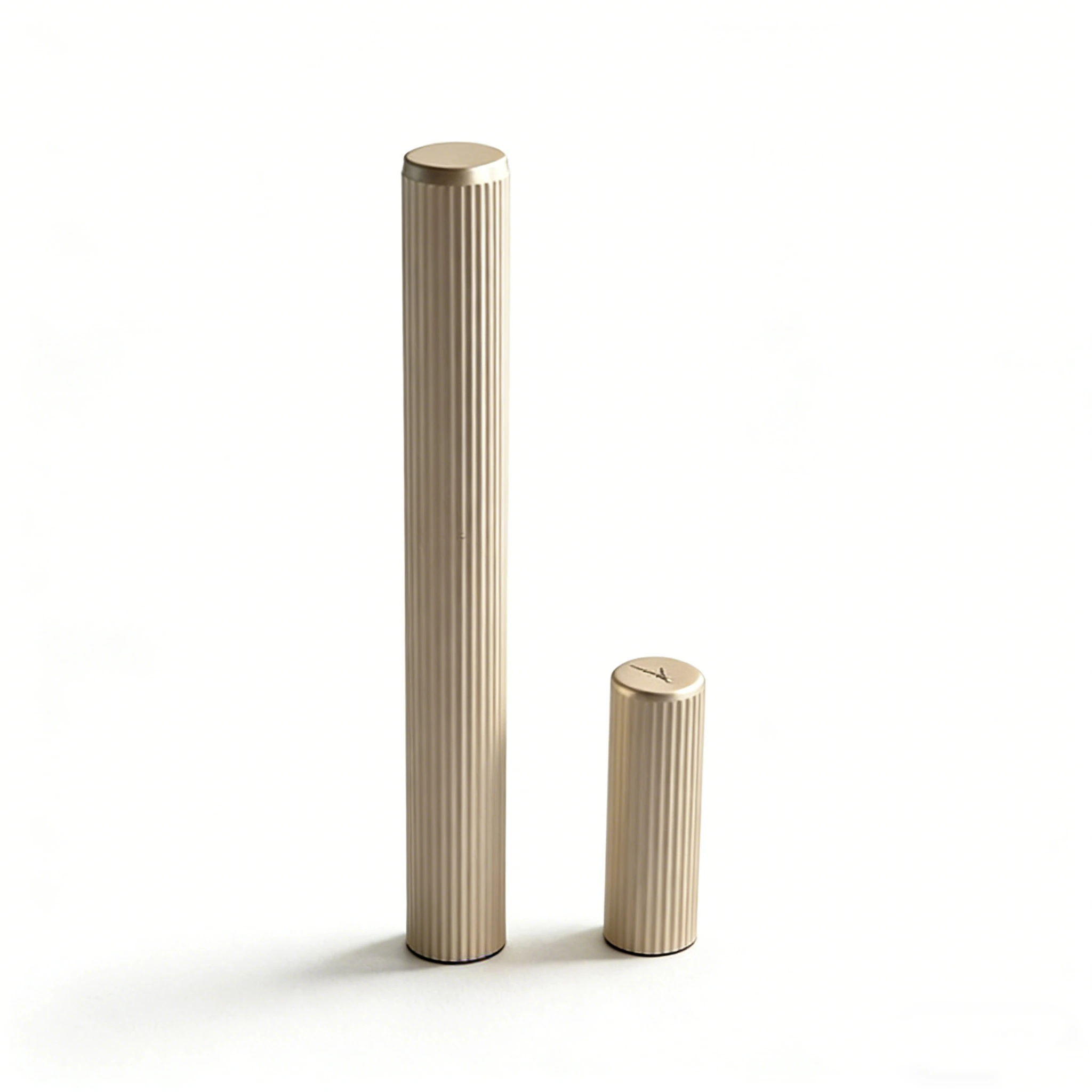
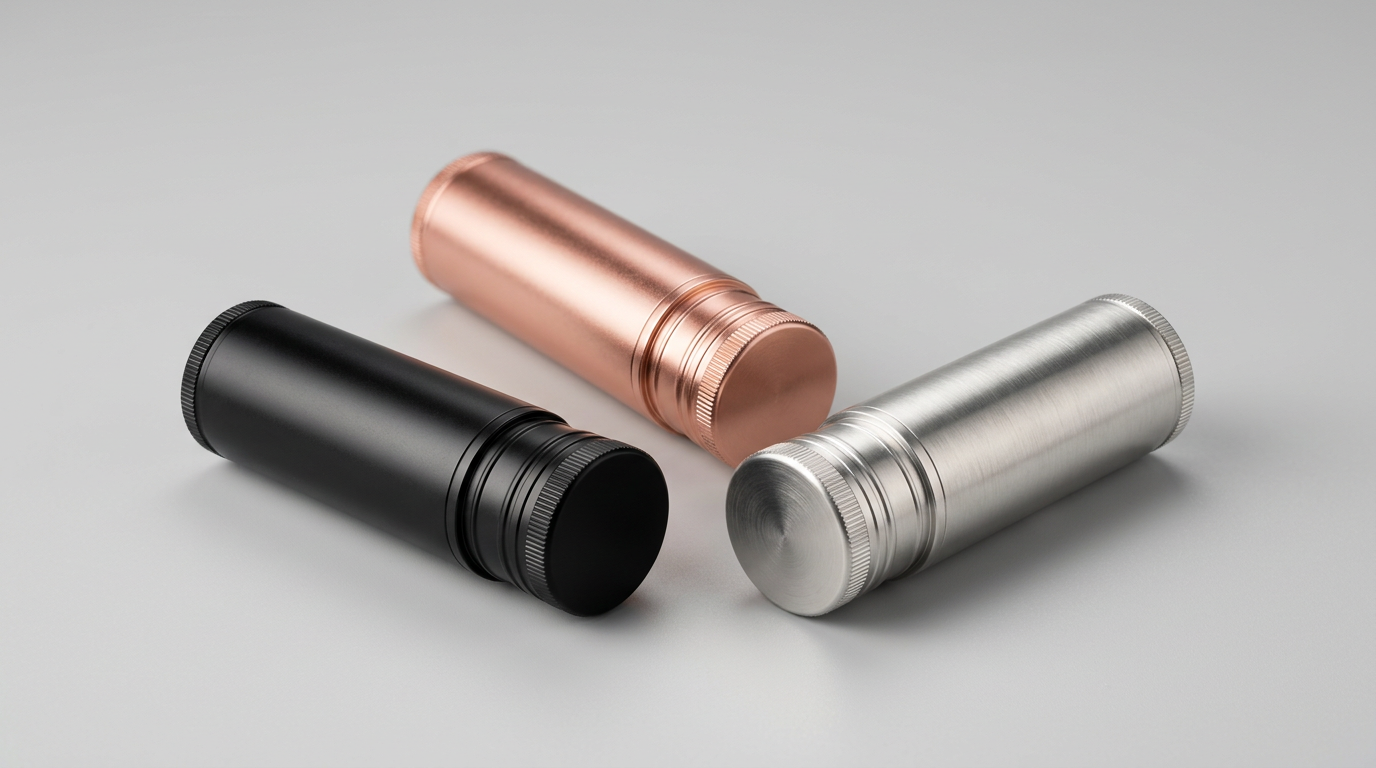
The JY1002A/B/V platform offers six major surface treatment systems, each balancing aesthetics and functional durability. Type II anodizing forms a 10–25μm oxide layer with hardness ratings of 300–450 HV (Vickers), delivering excellent scratch resistance while allowing color customization through electrolytic dyeing. With 47 standard color options and Pantone matching, anodized aluminum lipstick tubes maintain strong color stability even after 500+ hours of accelerated UV testing (ASTM G154).
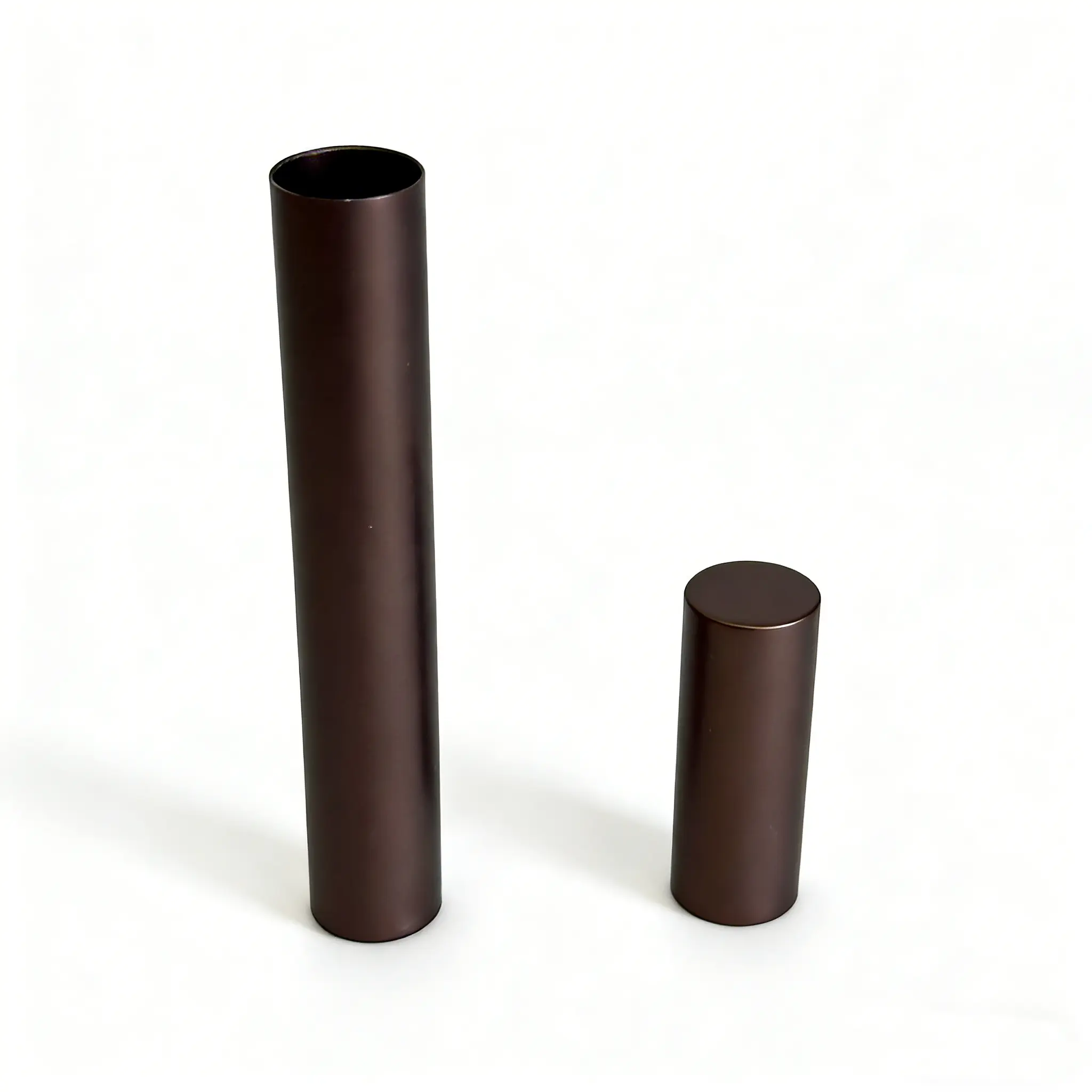
Powder coating options provide matte, semi-gloss, and high-gloss finishes with film thicknesses of 60–120μm. These thermosetting epoxy-polyester coatings achieve 5B adhesion ratings (ASTM D3359) and impact resistance exceeding 50 in-lbs (ASTM D2794), offering significantly higher durability than conventional liquid paint systems. For premium positioning, soft-touch coatings introduce polyurethane top layers with a friction coefficient of 0.6–0.8, creating a velvet-like tactile experience widely used in prestige cosmetic packaging. These finishing capabilities further enhance the branding value of aluminum lipstick tubes, allowing manufacturers to align packaging aesthetics with luxury positioning strategies.
Surface Treatment Comparison Table
| Treatment Type | Durability (Hours Salt Spray) | Color Range | MOQ Impact | Lead Time |
|---|---|---|---|---|
| Type II Anodizing | 500-1000 | 47 standard + custom | Standard | 18-22 days |
| Powder Coating | 300-600 | Unlimited (RAL/Pantone) | Standard | 20-25 days |
| Hot Stamping (Metallic) | 400-800 | 12 metallic finishes | +15% | 25-30 days |
| Laser Engraving | Permanent | Monochrome contrast | Standard | 15-18 days |
| UV Printing | 200-400 | Full CMYK spectrum | +20% | 22-28 days |
| Electroplating (Chrome) | 600-1200 | 3 metallic tones | +25% | 30-35 days |
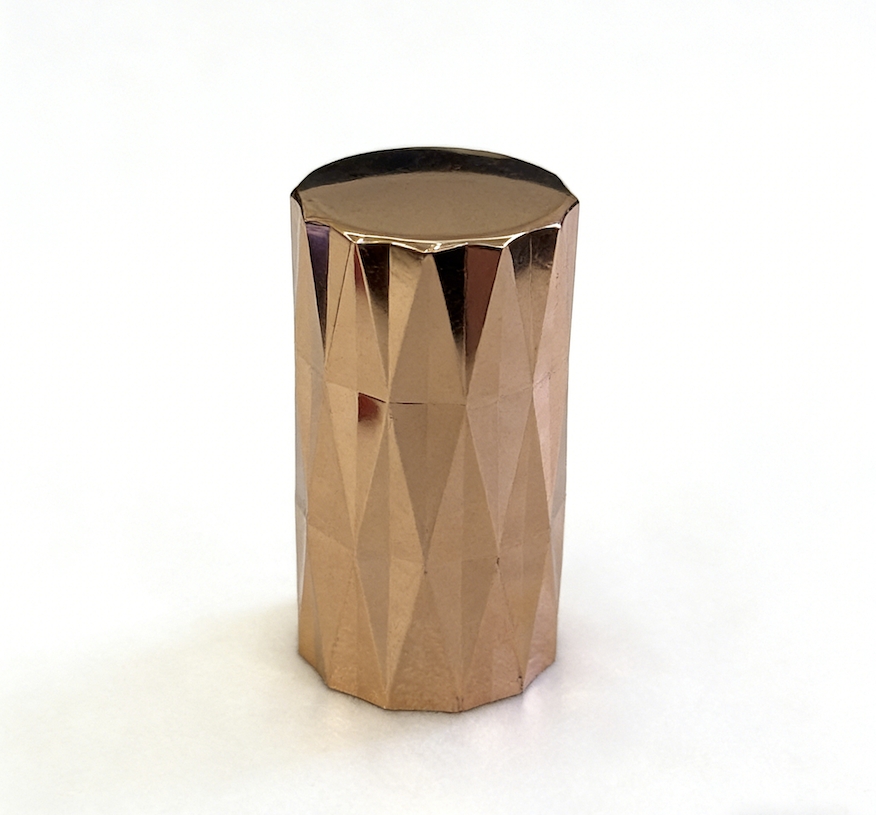
Hot stamping technology enables metallized patterns and brand logos with foil adhesion exceeding 90% coverage at 0.025mm precision—ideal for luxury brand authentication features. Laser engraving penetrates 0.05-0.15mm into the aluminum substrate, creating permanent, tamper-evident branding that withstands 10,000+ abrasion cycles (Taber test).
Market Trends Driving Aluminum Adoption
Consumer Demand for Eco-Friendly Cosmetic Packaging
Recent consumer research from the GlobalWebIndex Beauty Survey (2024) reveals 73% of cosmetic purchasers aged 25–44 actively seek sustainable packaging, with 58% willing to accept price premiums averaging 12–18% for verified eco-friendly alternatives. This behavioral shift has accelerated brand repositioning strategies across market segments, making aluminum lipstick tubes a preferred solution for brands targeting sustainability-driven consumers.
Estée Lauder Companies’ 2025 sustainability roadmap commits to 75% recyclable, refillable, or reusable packaging by 2025, with aluminum tubes featuring prominently in reformulated product lines. L’Oréal’s “Sharing Beauty With All” program has converted 34 lipstick SKUs to aluminum packaging since 2022, reporting 23% increases in repeat purchase rates among eco-conscious consumer segments. Independent brand Axiology achieved B-Corporation certification partially through aluminum tube adoption, leveraging packaging sustainability as a core brand narrative that drove 340% revenue growth over three years.
Social media analytics demonstrate that packaging sustainability generates 2.7× higher engagement rates than product performance claims alone. Instagram posts featuring aluminum tubes with recycling symbols achieve 41% higher save rates, indicating strong consumer intent to purchase. This digital amplification effect provides quantifiable marketing ROI beyond the physical packaging investment, further strengthening the adoption case for aluminum lipstick tubes.
Regulatory Pressures and Compliance Requirements
California Senate Bill 54 (2022) mandates 65% reduction in single-use plastic packaging by 2032, with intermediate targets requiring 25% reduction by 2028. Cosmetic brands distributing in California face material substitution imperatives affecting approximately 18% of the North American market by volume. Aluminum lipstick tubes provide immediate compliance pathways, avoiding the complex chemical recycling infrastructure requirements proposed for plastic alternatives.
The EU Single-Use Plastics Directive (2019/904) restricts specific plastic formats while exempting metal packaging, creating regulatory arbitrage opportunities for aluminum adopters. Extended Producer Responsibility (EPR) schemes now active in France, Germany, and the Netherlands impose per-unit fees ranging from €0.08–€0.15 for plastic cosmetic packaging, while aluminum incurs €0.02–€0.04 fees due to established recycling infrastructure—a 70% cost differential favoring metal packaging.
China’s “14th Five-Year Plan” for plastic pollution control (2021–2025) establishes progressive bans on non-recyclable cosmetic packaging in tier-1 cities, affecting market access for brands using composite plastic-metal tubes. Pure aluminum construction ensures compliance across all provincial regulations, maintaining distribution flexibility as enforcement expands to tier-2 and tier-3 markets representing 420 million consumers. For global cosmetic manufacturers, aluminum lipstick tubes are increasingly not just a branding choice, but a regulatory-safe packaging strategy.
Commercial Value Proposition for B2B Buyers
Total Cost of Ownership Analysis
While aluminum lipstick tubes command 18-25% higher unit costs versus plastic alternatives ($0.42-$0.58 vs. $0.32-$0.42 at 50,000-unit order volumes), total cost of ownership calculations reveal favorable economics over 24-month product lifecycles. Brands avoid escalating EPR fees projected to increase 8-12% annually through 2030, representing $0.03-$0.06 per unit in avoided costs by year three of aluminum adoption.
Reduced product waste from superior barrier properties generates measurable savings: extending shelf life from 24 to 36 months decreases inventory write-offs by 15-20%, worth $0.08-$0.12 per unit for products with $4.50 COGS. Premium positioning enabled by aluminum packaging supports 8-15% retail price increases without volume elasticity, adding $0.64-$1.20 gross margin per unit for products retailing at $24-$32.
Tooling investments for custom aluminum tubes range from $2,800-$4,500 for standard configurations, amortizing to $0.06-$0.09 per unit at 50,000-unit production runs. Reorder flexibility allows 30-40% faster turnaround versus plastic injection molding, reducing safety stock requirements and associated carrying costs by 12-18%.
Supply Chain Advantages and Quality Assurance
Manufacturers of aluminum cosmetic packaging typically maintain ISO 9001:2015 quality management and ISO 14001:2015 environmental management certifications, providing audit-ready compliance documentation that satisfies retailer and distributor requirements. Third-party verification through SGS or Intertek testing protocols ensures consistent material composition and performance specifications.
Defect rates for precision-manufactured aluminum tubes average 0.28% across filling, capping, and labeling operations—substantially lower than the 1.2% industry average for plastic tubes. This quality differential reduces line stoppages and rework costs by $0.04-$0.07 per unit in high-volume production environments. The material’s dimensional stability eliminates the “flash” and “sink marks” common in injection-molded plastic, reducing pre-filling inspection labor by 60%.
Lead time advantages emerge in reorder scenarios: established aluminum tube production requires 15-18 days for repeat orders versus 25-30 days for plastic alternatives requiring mold validation cycles. This responsiveness supports agile inventory strategies and reduces stockout risks during promotional periods, protecting revenue streams worth 15-25% of annual sales for seasonal cosmetic categories.
FAQ Module
Q1: What is the minimum order quantity for custom-finished aluminum lipstick tubes like the JY1002A/B/V series?
Standard MOQs for the JY1002A/B/V collection range from 10,000 to 30,000 units, depending on finish complexity. Basic anodized finishes in stock colors qualify for 10,000-unit minimums, while custom Pantone matching, multi-color printing, or electroplating typically require 20,000-30,000 units to justify tooling and setup costs. Many suppliers offer “test market” programs at 5,000-unit minimums with premium pricing (+25-35%) to support new product launches before committing to full production volumes.
Q2: How does the weight difference between aluminum and plastic tubes affect shipping costs?
A standard JY1002A aluminum tube weighs approximately 8.2g versus 5.1g for equivalent plastic packaging—a 61% increase. For a 10,000-unit shipment, this adds 31kg of freight weight. However, aluminum’s superior stacking strength (compression resistance >40N vs. 18N for plastic) enables denser palletization, increasing units per pallet from 8,400 to 11,200—a 33% volumetric efficiency gain. Net logistics impact typically ranges from +3% to -2%, depending on shipping mode and distance, with ocean freight often achieving cost parity due to volumetric advantages.
Q3: Can aluminum tubes accommodate airless pump mechanisms for high-viscosity formulations?
Yes, the JY1002V variant specifically supports airless pump integration for formulations up to 50,000 cPs viscosity. The design incorporates a precision-machined piston chamber with EPDM seals and a vacuum-generating pump mechanism that maintains product isolation from air throughout the usage cycle. This configuration suits liquid lipsticks, lip glosses, and treatment balms requiring oxidation prevention. Minimum order quantities for airless-compatible versions start at 15,000 units due to the specialized pump component sourcing and assembly requirements.
Conclusion
Aluminum lipstick tubes represent a convergence of sustainability imperatives, technical innovation, and brand differentiation opportunities that address the cosmetics industry’s most pressing challenges. The JY1002A/B/V collection exemplifies how precision manufacturing, customizable finishes, and material science create packaging solutions that satisfy regulatory requirements while elevating consumer perception and product integrity.
For procurement teams balancing ESG commitments with commercial performance metrics, aluminum packaging delivers quantifiable advantages: 95% recycling energy savings, 40-60% extended product shelf life, sub-0.3% defect rates, and premium positioning support worth 8-15% price elasticity. As regulatory frameworks intensify and consumer expectations evolve, aluminum tubes provide future-proof compliance and market access across major global markets.
The investment case extends beyond unit cost considerations to encompass total lifecycle value—reduced waste fees, enhanced brand equity, supply chain resilience, and alignment with corporate sustainability narratives that drive stakeholder confidence. Brands adopting aluminum packaging today position themselves as category leaders in the accelerating transition toward circular economy business models, capturing market share from competitors constrained by legacy plastic infrastructure.