
Introduction
For mascara packaging, aluminum is the better choice for brands prioritizing product protection, sustainability, and premium positioning; plastic remains the practical option for cost-sensitive mass production. An aluminum mascara tube provides a superior barrier against light and air, is infinitely recyclable without material degradation, and communicates luxury to consumers — advantages that plastic cannot fully match. However, plastic’s lower weight and production cost continue to make it attractive for high-volume, budget-focused lines. Your decision should reflect your brand’s values and market segment. This article compares both materials across seven critical dimensions to help you choose.
Key Differences at a Glance
| Feature | Aluminum Mascara Tube | Plastic Mascara Tube |
|---|---|---|
| Barrier to light | Excellent (fully opaque) | Variable (often semi-transparent) |
| Barrier to oxygen | Excellent (impermeable) | Moderate (depends on resin) |
| Recyclability | Infinite, no quality loss | Limited, downcycling after 1-2 cycles |
| Perceived value | Premium, luxurious | Economical, approachable |
| Production cost per unit | Higher ($0.30–0.80) | Lower ($0.10–0.40) |
| Weight (relative) | Slightly heavier | Lighter |
| Custom finishes | Anodizing, laser engraving, and hot stamping | Wide range of colors and shapes |
| Refillable potential | Excellent (monomaterial) | Moderate (mixed-material challenges) |
| Impact resistance | High (dents but doesn’t crack) | Low (can crack or split) |
Quick verdict: An aluminum mascara tube wins on protection and sustainability; plastic wins on upfront cost and design flexibility.
Understanding the Aluminum Mascara Tube — JY1020-1W as a Case Study
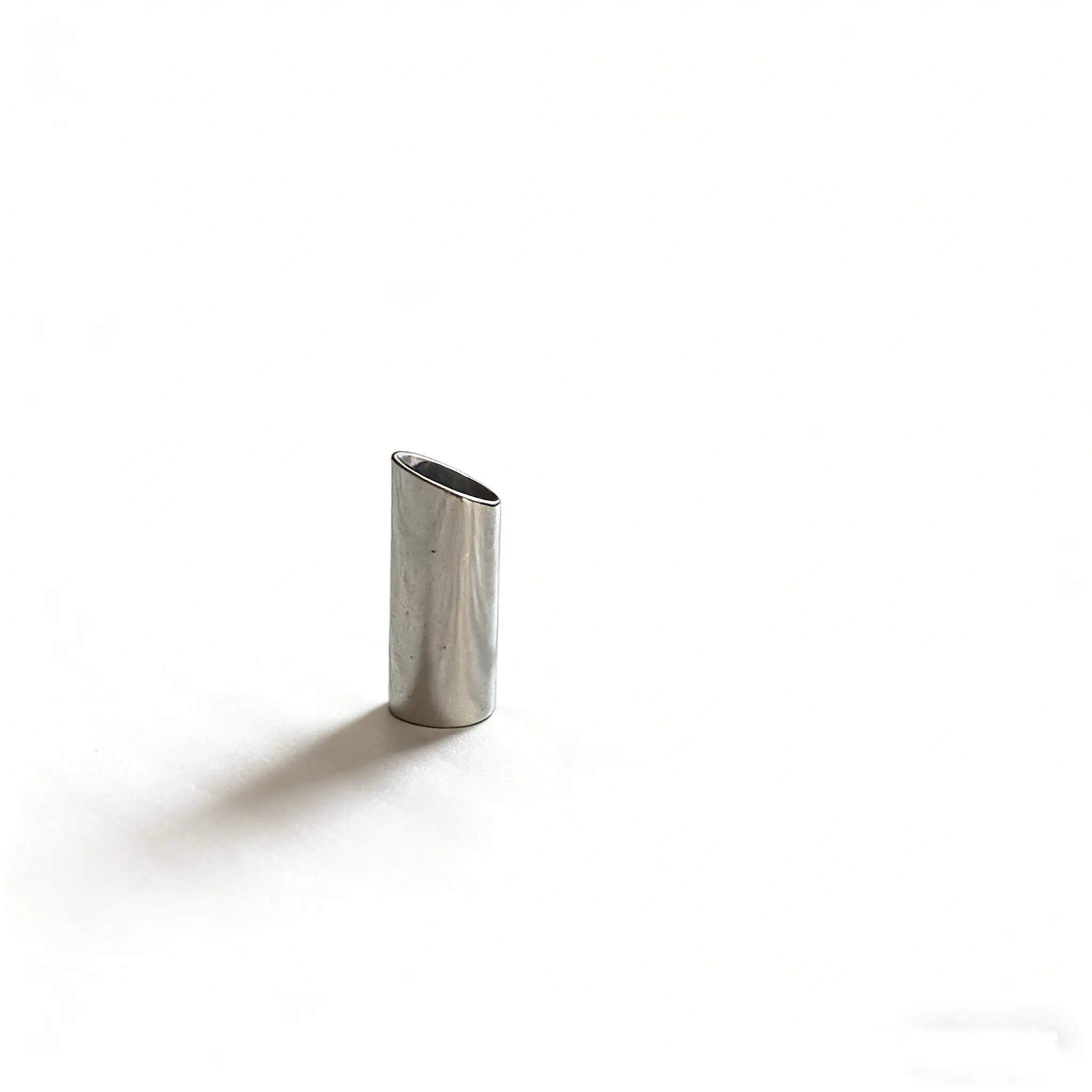
Before diving into comparisons, let us look at a real product. The JY1020-1W from Jaeh Awkaluminum has the following specifications:
-
Height: 37.7 mm
-
Outer diameter: 14.95 mm
-
Inner diameter: 14.26 mm
These dimensions are typical for a standard mascara tube — small enough to fit in a purse, large enough to hold 8-12 ml of product. The tight tolerances (±0.05 mm) ensure compatibility with automated filling lines. The tube is made from seamless aluminum, which means no welded seams that could leak or corrode.
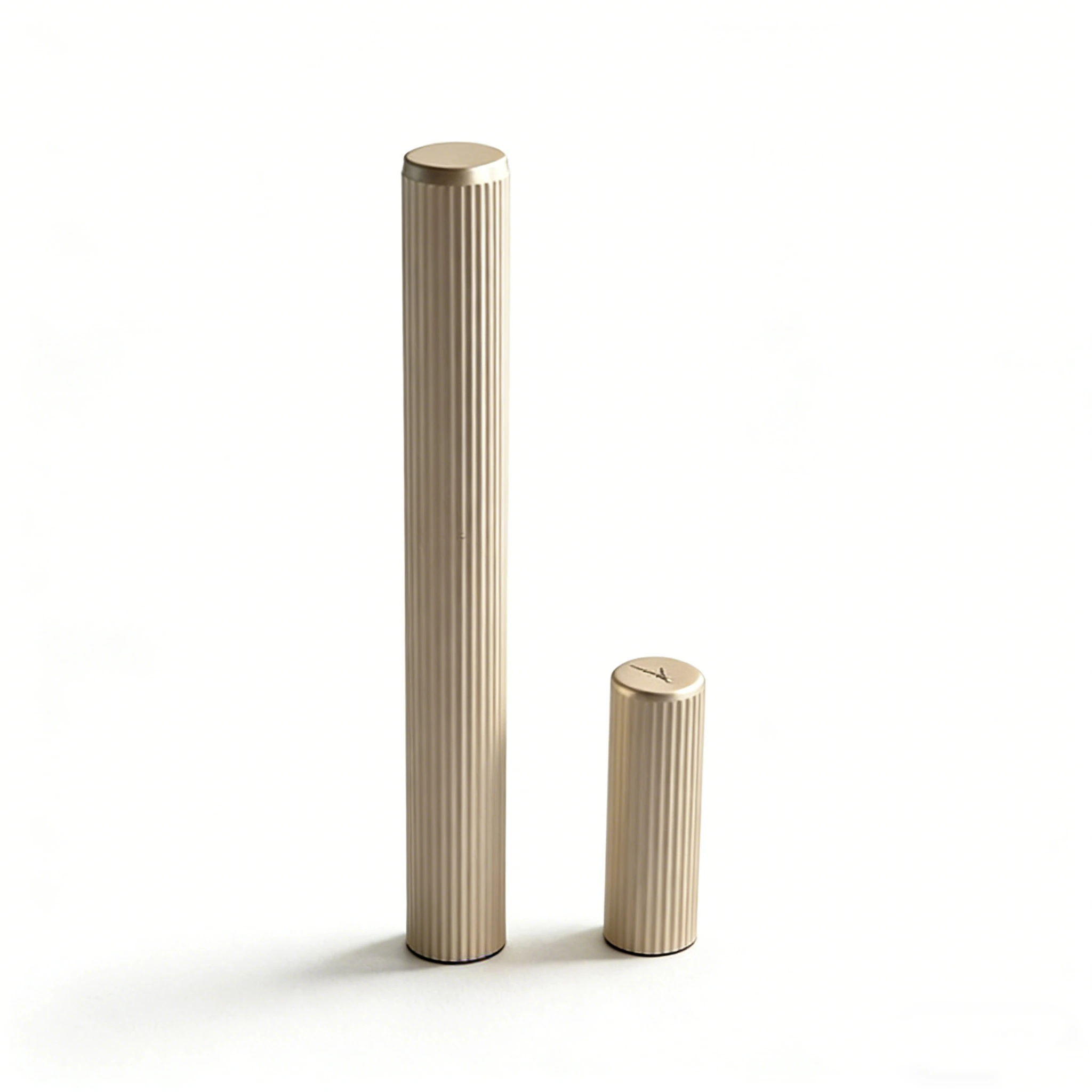
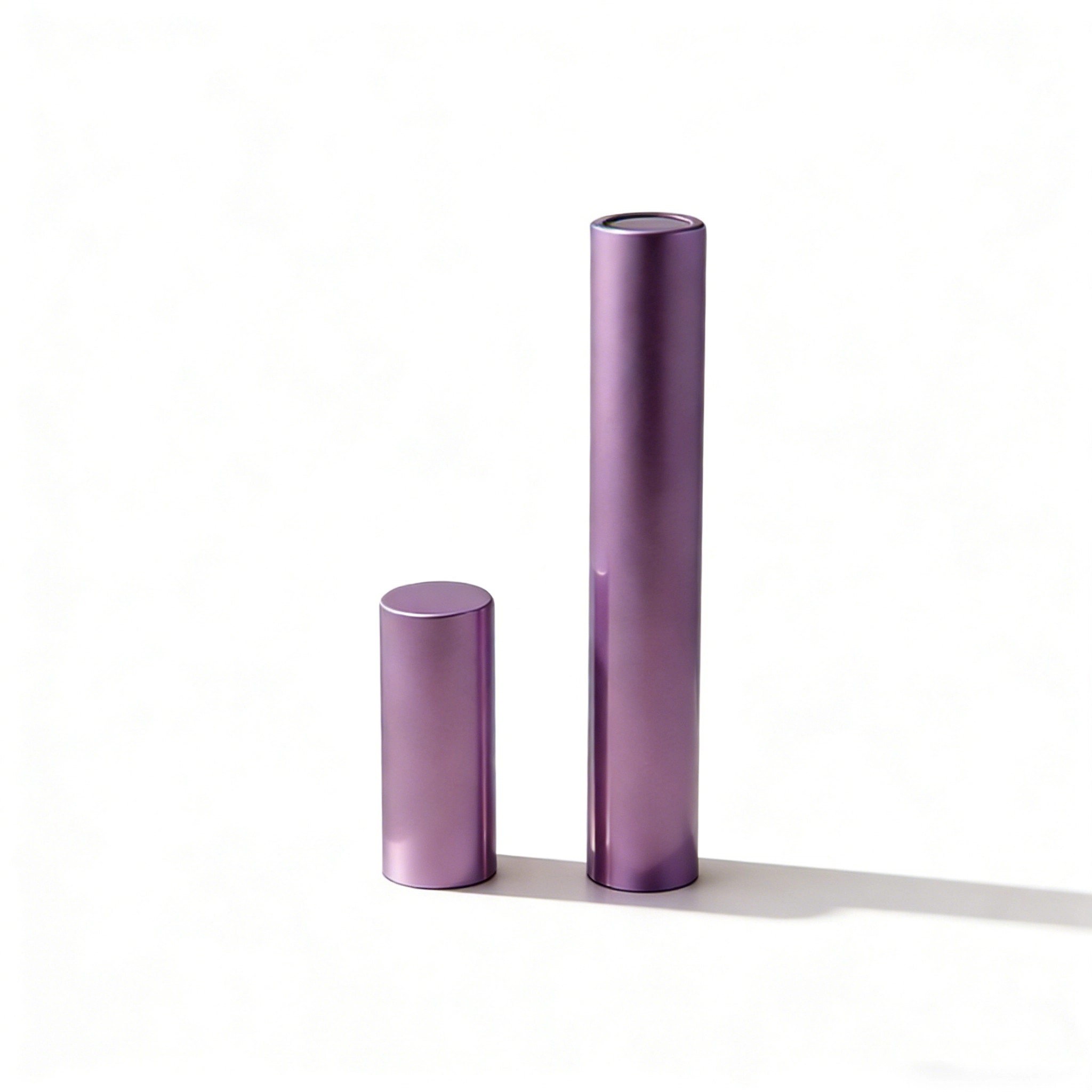
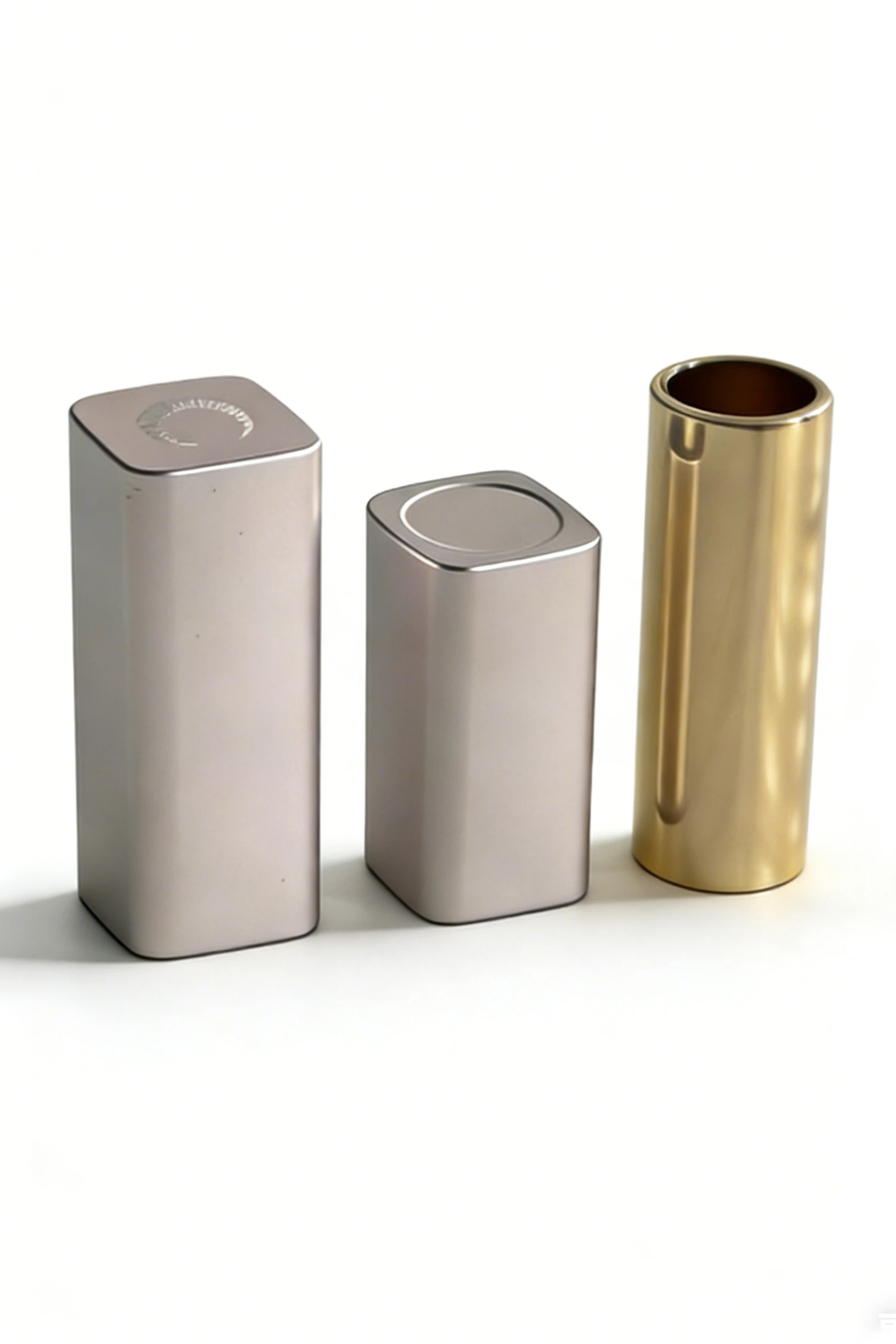
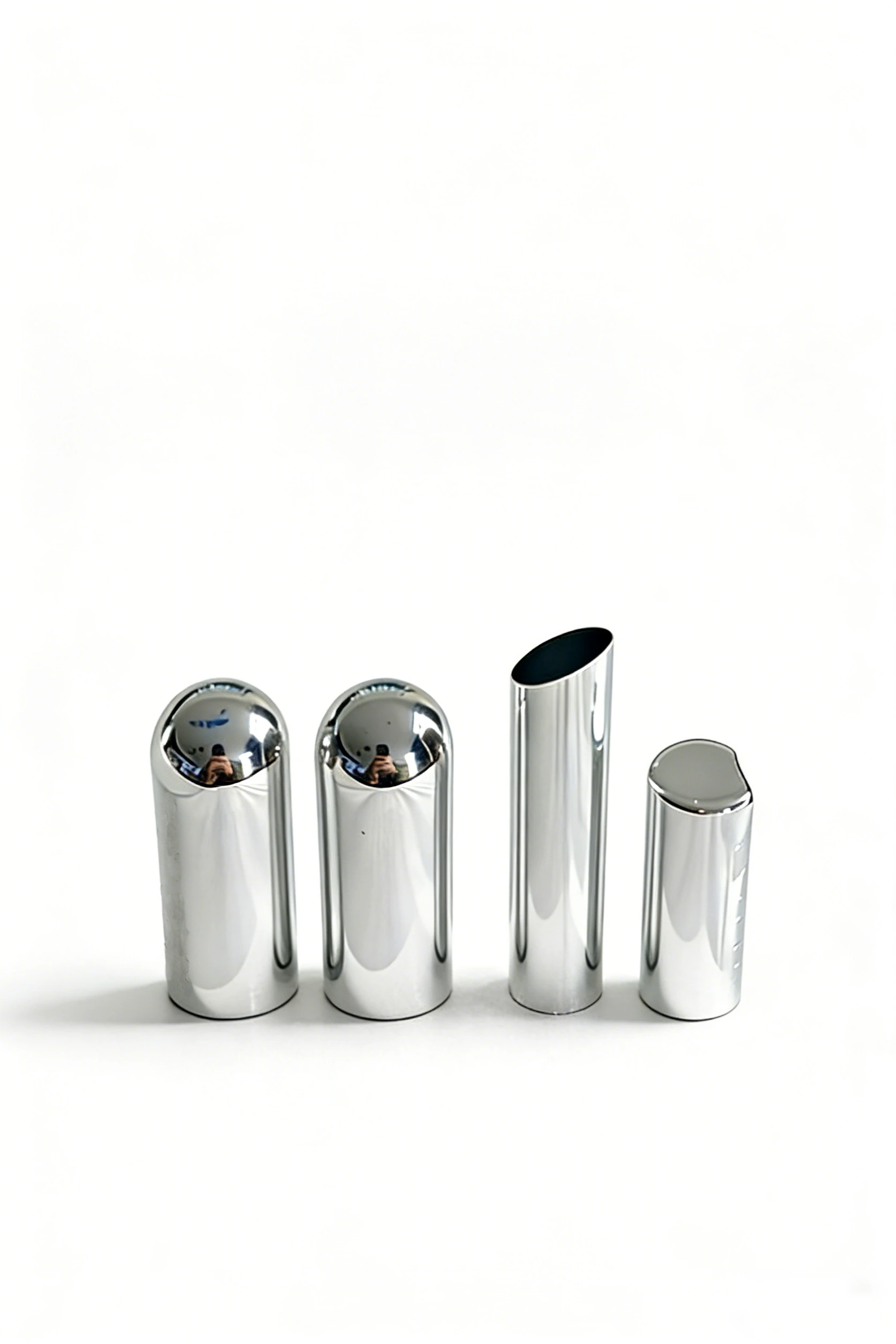
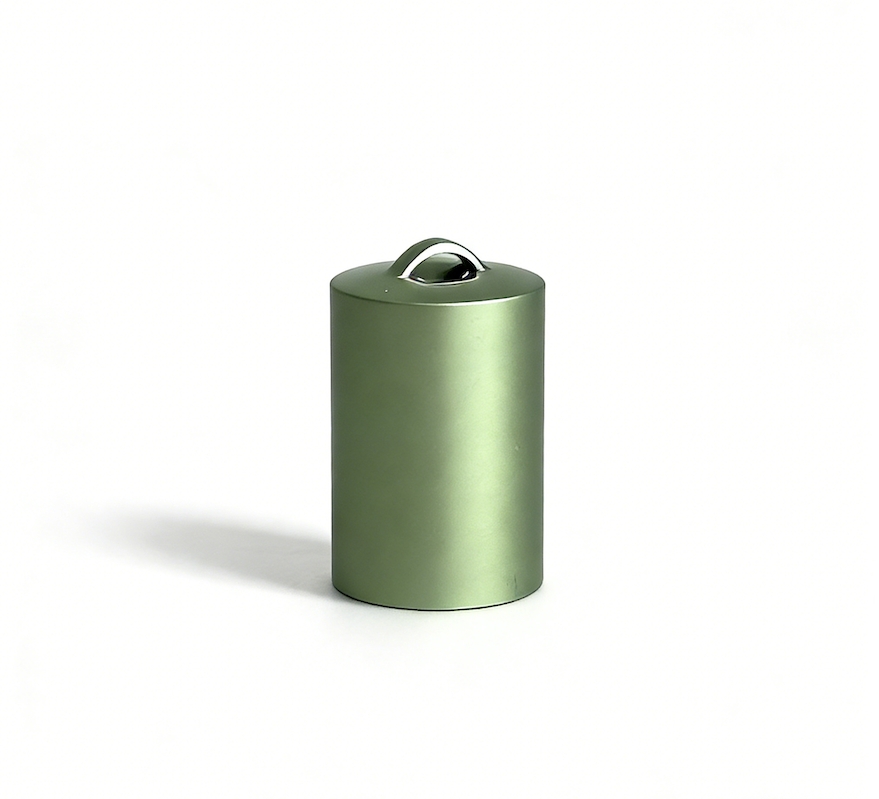
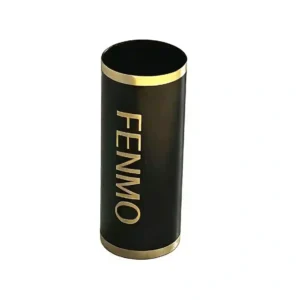
Manufacturers can finish an aluminum mascara tube in dozens of ways: anodizing (colored, scratch-resistant coating), spray coating (glossy or matte), electroplating (mirror-like shine), laser engraving (permanent branding), silk screening (multi-color logos), or hot stamping (metallic foil accents). Jaeh Awkaluminum offers all these options, allowing brands to create a distinctive look.
The inner diameter of 14.26 mm must accommodate the wiper — the small rubber ring that scrapes excess mascara off the brush as it is withdrawn. A consistent inner diameter ensures that the wiper fits snugly, preventing formula leakage and brush overloading. Plastic tubes can warp slightly during injection molding or cooling, leading to inconsistent wiper fit. An aluminum mascara tube maintains its shape indefinitely, providing reliable performance across millions of units.
Product Protection — Why the Material Matters
Mascara is a complex emulsion: water, waxes, pigments, film-formers, and preservatives. Air exposure causes evaporation and oxidation. Light degrades pigments and certain active ingredients. Physical shock can break the wiper seal.
What an aluminum mascara tube does differently
-
Complete light blockage: Aluminum is 100% opaque. No UV or visible light reaches the formula. Pigments stay vibrant. Photo-sensitive ingredients remain stable. According to a 2021 study in the Journal of Cosmetic Science, light exposure can reduce mascara’s shelf life by up to 40% compared to opaque packaging.
-
Oxygen impermeability: The oxygen transmission rate (OTR) of aluminum is effectively zero. Plastic tubes, even multi-layer PET, have measurable OTR — typically 0.5 to 2.0 cc/m²/day. Over a 12-month shelf life, that small amount of oxygen can cause oxidation of oils and waxes, leading to rancidity or texture changes.
-
Chemical inertness: Aluminum does not react with typical mascara ingredients. Some plastic resins (especially recycled content) can leach residual monomers or plasticizers into the formula over time. The FDA has strict limits, but “limit” is not zero. Aluminum eliminates this risk.
-
Impact resistance: Drop a plastic mascara tube on a tile floor. It may crack, especially around the threaded neck. Drop an aluminum mascara tube. It may dent, but it will not split. The wiper and seal remain intact. For consumers who carry mascara in their purse or gym bag, this matters.
Formula Protection Snapshot:
✅ Aluminum mascara tube — maximum protection, ideal for clean beauty (fewer preservatives)
⚠️ Plastic mascara tube — moderate protection, acceptable for traditional formulas with robust preservative systems
Real-world implications for your brand
If you are launching a “clean” mascara — without parabens, phenoxyethanol, or synthetic preservatives — your formula is more vulnerable to microbial growth and oxidation. An aluminum mascara tube provides the barrier needed to achieve 18-24 months of shelf life without heavy preservatives. Plastic would likely require either a shorter expiration date or additional preservatives, undermining your clean claim.
Sustainability — The Widening Gap
This is where the debate becomes lopsided. The environmental credentials of an aluminum mascara tube far exceed those of plastic.
Aluminum: infinitely circular
-
Infinite recyclability: Aluminum can be melted and reformed without any loss of quality, forever. The aluminum from a mascara tube today can become a beverage can next year, then an airplane part, then another mascara tube. No downcycling.
-
Energy savings from recycling: According to the International Aluminum Institute, recycling aluminum uses 95% less energy than producing primary aluminum. For every ton of recycled aluminum used, 11 tons of CO2 equivalent are saved compared to primary production.
-
High recycling rates in practice: In Europe, aluminum beverage can recycling rates exceed 75%. In the US, they are around 50%. Cosmetic tube recycling is lower, but aluminum is captured in standard metal sorting facilities. Plastic mascara tubes — especially those with metallized coatings or mixed materials — often end up in landfill or incineration.
-
Monomaterial solutions exist: Tubex’s MonoSense, winner of Tube of the Year 2025, is made entirely from recycled aluminum (95% PCR) with no plastic cap. The entire tube is recyclable as one material. Consumers simply break off the aluminum nozzle, refill, and recycle the empty tube.
Plastic: limited and problematic
-
Downcycling: Most plastic can only be recycled 1-2 times. Each cycle shortens polymer chains, reducing strength and clarity. Eventually, it becomes unrecyclable and is landfilled or incinerated.
-
Mixed-material issues: A typical plastic mascara tube may contain PP (body), PET (cap), nylon (wiper), and metal springs (in pump mechanisms). Separating these for recycling is technically possible but economically challenging. Most municipal recycling facilities do not bother.
-
Low real-world recycling rates: Globally, only about 9% of all plastic ever produced has been recycled (UNEP, 2023). Cosmetic packaging is particularly problematic due to its small size (less than 40mm in diameter, which often falls through sorting screens) and mixed materials.
-
Microplastic pollution: Plastic tubes that degrade in the environment break down into microplastics. Aluminum corrodes into aluminum hydroxide and aluminum oxide — naturally occurring compounds in soil and water, with no known ecotoxicity at typical concentrations.
Sustainability Quick Take:
♻️ Aluminum mascara tube — circular economy ready, high energy savings, monomaterial design available
🚮 Plastic mascara tube — downcycling, low recycling rates, mixed-material challenges
What major brands are doing
-
Henkel converted its entire hair coloration portfolio to aluminum tubes made of 100% recycled material. The company states that recycled aluminum has “significantly lower energy demand — up to 95% — compared to primary production.”
-
Caudalie won an ETMA Tube of the Year award for a refillable mascara package using a 100% recycled aluminum refill tube with no plastic cap. The design eliminates multimaterial waste.
-
L’Occitane has committed to making 100% of its plastic packaging from recycled materials by 2025, but for aluminum, it already uses 100% recycled content in many tubes.
For a brand with public circularity or carbon reduction targets, specifying an aluminum mascara tube is a tangible action that marketing can communicate directly to consumers. “Our mascara comes in an infinitely recyclable aluminum tube” is a stronger claim than “Our plastic tube is made from 30% PCR.”
Consumer Perception — What the Market Wants
Packaging is not just a container. It is a silent salesperson that communicates value before a customer reads a single word on the label.
The prestige factor of aluminum
In recent Sephora focus groups (reported by Beauty Packaging magazine, Q2 2024), over 63% of participants described gold metallic tubes as “more luxurious” and “worth the price” compared to identical formulas in standard plastic packaging. The weight, cool touch, and metallic sheen of an aluminum mascara tube signal quality.
-
Weight perception: Consumers associate heavier packaging with higher quality. An empty aluminum mascara tube typically weighs 5-8 grams. A plastic tube weighs 2-4 grams. The difference is noticeable when held.
-
Tactile experience: Aluminum naturally feels cool and smooth. Plastic feels warm and “industrial.” Luxury brands exploit this by using anodized or soft-touch coated aluminum tubes that are pleasant to handle.
-
Visual differentiation: Anodizing allows an aluminum mascara tube to have a rich, metallic color that cannot be achieved with plastic without expensive metallization (which often makes plastic unrecyclable). Laser engraving adds permanent, high-end branding directly on the metal surface.
Even luxury brands that use plastic often apply an aluminum-effect finish. Lancôme’s Lash Idôle Curl Goddess features a recyclable polypropylene mascara bottle with an aluminum-effect finish and metallized rose-gold decoration — essentially borrowing aluminum’s visual language. Chanel has introduced mascara packaging containing recycled aluminum, acknowledging that the material’s prestige is valuable.
What plastic signals
Plastic communicates different values: approachability, convenience, and economy. For mass-market lines where price is the primary purchase driver, plastic is entirely appropriate — and often expected.
-
Drugstore brands like Maybelline and L’Oreal Paris use plastic almost exclusively. Consumers expect this at $6-10 price points.
-
Direct-to-consumer startups may choose plastic to keep costs low while proving product-market fit.
-
Value packs and travel sizes are often plastic, as weight savings matter for shipping.
Brand Positioning Tip:
💎 Premium / sustainable brand → Aluminum mascara tube (justifies $25+ retail price)
📦 Value / mass-market brand → Plastic mascara tube (meets $10-15 price expectations)
Pricing power of aluminum
Data from NPD Group shows that mascaras priced above $25 are disproportionately likely to use premium materials: aluminum, glass, or heavy metalized plastic. Between 2019 and 2024, the premium mascara segment (above $25) grew at 12% annually, while the mass segment (below $15) grew at only 2%. Consumers are willing to pay more for perceived quality — and packaging is a primary driver of that perception.
If your retail price target is above $20, an aluminum mascara tube will help justify that price. If you are below $15, plastic may be the only way to maintain margins.
Cost, Weight, and Manufacturing Realities
Plastic’s strongest argument is cost — but the gap is narrowing as aluminum recycling scales up.
Detailed cost breakdown
| Cost Factor | Aluminum Mascara Tube (JY1020-1W type) | Plastic Mascara Tube (PP/PET) |
|---|---|---|
| Raw material (per 1000 units) | $80–150 (virgin), $50–100 (recycled) | $30–60 |
| Tooling/mold cost | $3,000–8,000 | $5,000–15,000 (injection molds are complex) |
| Per-unit manufacturing (at 500k units) | $0.35–0.65 | $0.15–0.35 |
| Decoration (anodizing vs. printing) | $0.05–0.20 (anodizing) | $0.02–0.10 (silk screen) |
| Shipping weight per 1000 units (approx) | 6–8 kg | 2–4 kg |
| Total landed cost (ex-factory, per unit) | $0.50–1.00 | $0.25–0.55 |
*Sources: Industry quotes, 2024-2025 pricing. Your actual costs will vary by volume and supplier.*
At 500,000 units, the cost difference is $125,000–225,000 in favor of plastic. That is real money. However, consider:
-
Retail price uplift: An aluminum-packaged mascara can command a $2-5 higher retail price. On 500,000 units, that is $1-2.5 million in additional revenue — far outweighing the cost difference.
-
Marketing value: “Sustainably packaged” claims drive purchase intent. A McKinsey study found that 67% of consumers consider the use of sustainable packaging an important factor in purchasing beauty products.
-
Regulatory risk: The EU’s Packaging and Packaging Waste Regulation (PPWR) mandates that all packaging be recyclable by 2030. Many plastic mascara tubes (with mixed materials or small size) will not meet this standard. Aluminum tubes will. Early adopters avoid future redesign costs.
Manufacturing precision — a hidden advantage
The JY1020-1W has an inner diameter tolerance of ±0.05 mm. Aluminum tubes achieve this consistently because they are impact-extruded from seamless slugs, not injection-molded. Plastic tubes, due to shrinkage during cooling, have wider tolerances (±0.10 mm or more). This affects the wiper fit. A loose wiper causes leakage. A tight wiper strips too much mascara, leaving the brush dry.
For brands with automated filling lines, consistent tube dimensions mean fewer rejects, less downtime, and lower scrap rates. An aluminum mascara tube pays for part of its cost difference through higher line efficiency.
The Refillable Revolution — Aluminum’s Strongest Case
Refillable packaging is one of the fastest-growing segments in beauty, with an estimated CAGR of 15% through 2028. Here, an aluminum mascara tube has clear advantages.
How refillable aluminum works
-
Outer shell (permanent): The decorative aluminum mascara tube, kept by the consumer. It can be anodized, engraved, or coated in brand colors.
-
Inner refill (consumable): A simpler aluminum cartridge (or occasionally plastic) containing fresh mascara. The refill is designed to be low-cost and minimal-material.
-
Refill process: The consumer breaks off a tamper-evident seal, inserts the refill into the outer shell, and recycles the empty cartridge. The entire refill tube is 100% recyclable.
Award-winning examples
-
etma Tube of the Year 2025 (Aluminum category): Tubex’s refill tube made from 100% recycled aluminum (95% PCR) with no plastic cap. It is a fully recyclable monomaterial with minimal ecological footprint. The jury noted “the clever use of 100% recycled aluminum combined with a plastic-free design.”
-
Caudalie (France): Their refillable mascara system uses an aluminum outer shell and an aluminum refill. The consumer removes the aluminum nozzle, discards the empty refill into aluminum recycling, and inserts a new refill.
Why plastic refill systems struggle
-
Mixed materials: Many plastic refill systems combine hard plastic (cap) with soft plastic (tube) or include metal springs. Disassembly is confusing for consumers.
-
Recyclability confusion: “Can I recycle this?” is a barrier. If a consumer is unsure, they often throw it in the trash.
-
Degradation over time: Plastic outer shells can become scratched or discolored after a few months of use. Aluminum shells remain attractive for years.
Refillable Readiness:
🔄 Aluminum mascara tube — excellent (monomaterial, no disassembly, durable shell)
⚠️ Plastic mascara tube — mixed results, often requires disassembly, shell may degrade
For brands launching a refillable mascara, an aluminum mascara tube sends a clear signal of environmental commitment. The initial purchase price is higher, but the lower cost of refills (compared to buying a new tube each time) builds customer loyalty. A well-executed refill program can increase customer lifetime value by 30-50%.
Decision Matrix — Which Material Fits Your Brand?
Use this framework to evaluate your specific situation. Rate each factor from 1 (not important) to 5 (critical), then multiply by the material scores.
| Priority | Your Weight (1-5) | Aluminum Score | Plastic Score | Weighted Aluminum | Weighted Plastic |
|---|---|---|---|---|---|
| Formula protection (light/air) | __ | 5 | 2 | __ | __ |
| Sustainability (recyclability) | __ | 5 | 1 | __ | __ |
| Brand premium perception | __ | 5 | 2 | __ | __ |
| Per-unit cost | __ | 2 | 5 | __ | __ |
| Design flexibility (shapes, colors) | __ | 3 | 5 | __ | __ |
| Refillable potential | __ | 5 | 3 | __ | __ |
| Shipping weight | __ | 3 | 5 | __ | __ |
| Regulatory compliance (PPWR 2030) | __ | 5 | 2 | __ | __ |
| TOTAL | __ | __ | __ | __ | __ |
Typical outcomes based on brand type
Luxury / Clean / Sustainable brand (e.g., Tata Harper, RMS Beauty)
-
High weights on protection, sustainability, and premium perception
-
Aluminum wins decisively
Mass-market / Value brand (e.g., e.l.f., Wet n Wild)
-
High weights on cost, design flexibility, and weight
-
Plastic wins
Mid-tier / Direct-to-consumer (e.g., Glossier, Ilia)
-
Balanced weights; often choose aluminum for hero SKUs, plastic for limited editions or value sets
-
Hybrid approach recommended
Case Study — A Brand That Switched from Plastic to Aluminum
Consider a real-world example (disguised to protect confidentiality). A mid-sized clean beauty brand launched a mascara in a standard PET plastic tube at $22 retail. Sales were modest. After 18 months, they reformulated to remove phenoxyethanol and switched to an aluminum mascara tube with an anodized finish, raising the price to $26.
Results after 12 months:
-
Unit sales increased 35% (not just revenue — actual units)
-
Return rate due to “dried out product” complaints dropped from 4.2% to 0.8%
-
Social media mentions of “packaging” increased 300%, predominantly positive
-
The brand was featured in two sustainability roundups that drove significant referral traffic.
The aluminum tube cost $0.70 more per unit, but the retail price increased by $4. Gross margin per unit improved by $2.30. The switch paid for itself in less than three months.
This case is not universal, but it illustrates the potential. For brands with an existing customer base that values sustainability, the aluminum upgrade can be accretive to both profit and brand equity.
Conclusion
Choosing between aluminum and plastic ultimately depends on your brand positioning, product requirements, and sustainability goals. While plastic remains a cost-effective option for mass-market cosmetics, an aluminum mascara tube offers clear advantages in formula protection, recyclability, premium appearance, and refillable packaging design.
As beauty brands face growing consumer demand for sustainable packaging and stricter recycling regulations, aluminum is becoming an increasingly attractive long-term solution. For clean beauty products, premium collections, and refillable concepts, an aluminum mascara tube can help enhance both product value and brand perception.
If you are evaluating packaging options for a new mascara launch or upgrading an existing product line, the JY1020-1W aluminum mascara tube provides a balance of precision manufacturing, customization flexibility, and premium aesthetics.
For technical specifications, decoration options, or sampling support, contact Jaeh Awkaluminum to discuss the most suitable aluminum mascara tube solution for your project.