
Abstract
For fragrance brands and packaging procurement teams, container material directly impacts shelf life, transit safety, and consumer experience. Leakage and fragrance degradation remain major supply chain risks, often caused by insufficient packaging performance.
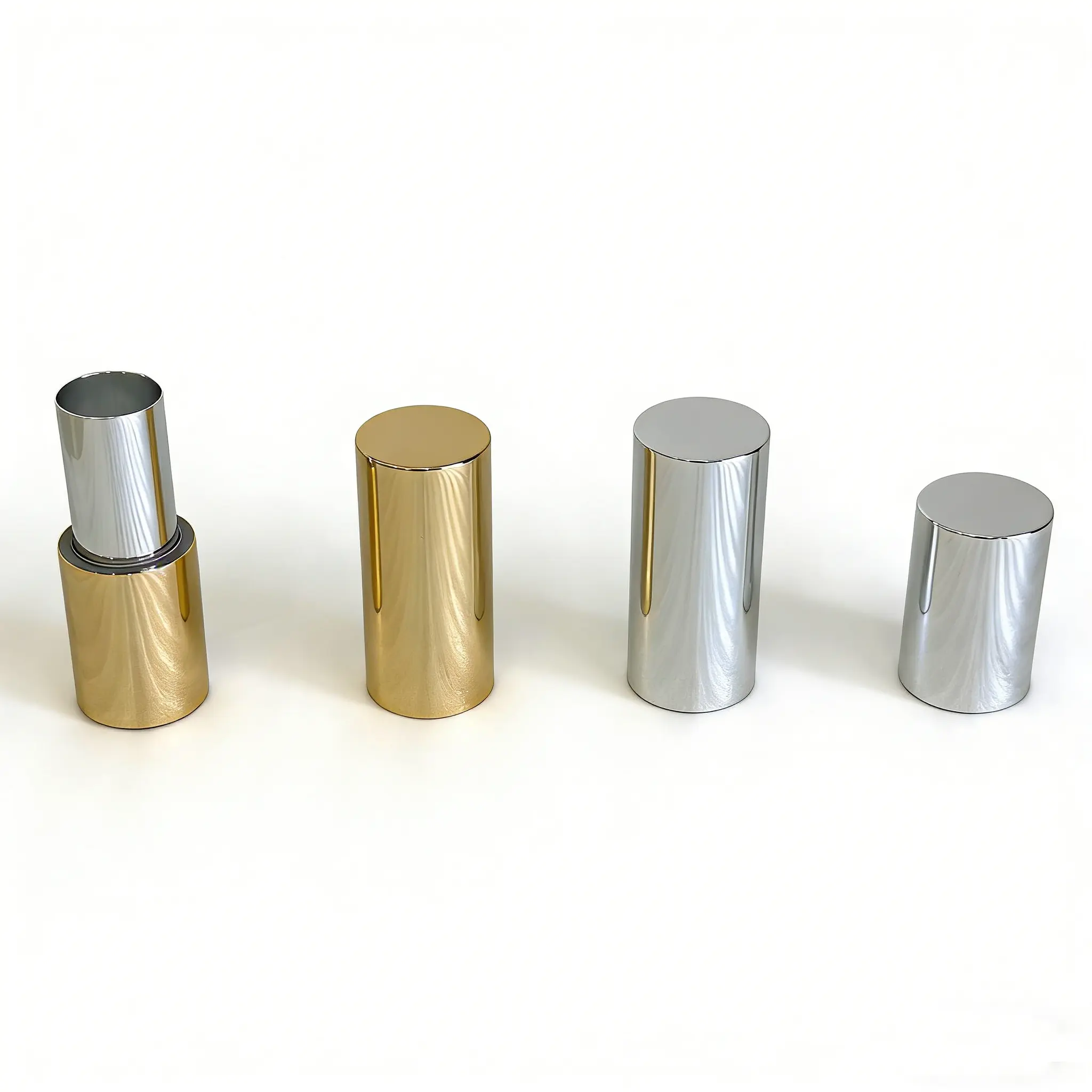
Aluminum perfume packaging provides reliable protection through superior barrier properties, UV resistance, and engineered sealing systems that help maintain fragrance integrity during storage and transportation.
This article examines the technical advantages, compliance requirements, and commercial value of aluminum perfume packaging, helping buyers select the right packaging solution for luxury fragrances, travel retail, and private label applications.
1. The Science Behind Aluminum’s Barrier Properties for Fragrance Protection
1.1 Material-Level Impermeability and Chemical Resistance
The effectiveness of aluminum perfume packaging as a fragrance container comes from aluminum’s inherent barrier properties. Its dense crystalline structure creates an impermeable surface against gases and liquids, providing near-zero permeability under standard ASTM E96 moisture vapor transmission testing. This is a key advantage over PET and HDPE plastics, which allow measurable migration of ethanol and aromatic compounds commonly found in fragrance formulations.
When ethanol migrates through plastic walls, two issues may occur: product loss caused by evaporation and changes in fragrance composition due to the selective escape of lighter aromatic molecules. Aluminum perfume packaging prevents this migration pathway, helping maintain fragrance consistency over extended storage periods.
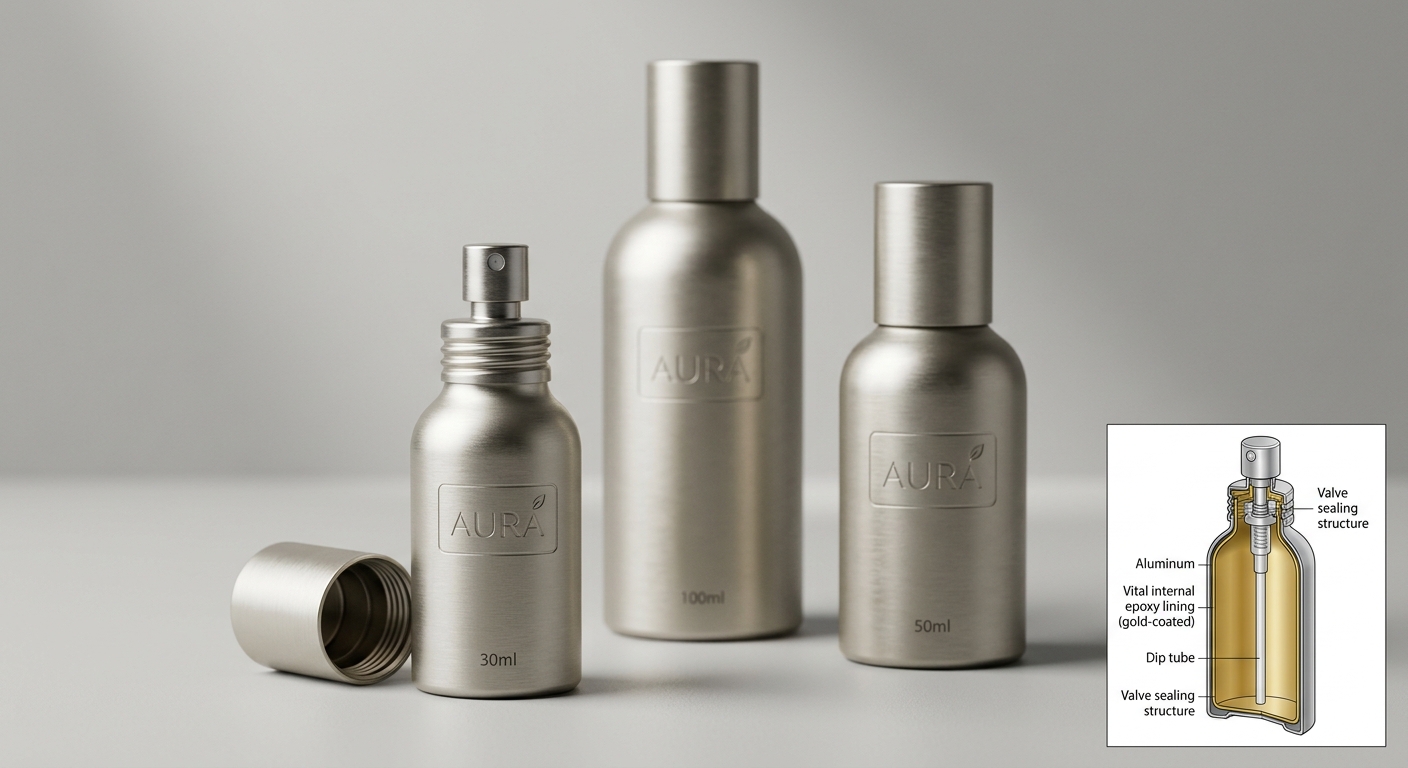
From a chemical resistance perspective, aluminum’s naturally formed oxide layer (Al₂O₃) provides passive protection against many solvents. However, fragrance formulations may contain acidic citrus compounds, alkaline musks, or reactive aldehydes. Therefore, manufacturers apply internal epoxy or lacquer linings to improve chemical compatibility across pH ranges from 3 to 11. This lining prevents direct contact between aluminum and the fragrance formula, reducing the risk of chemical reactions that could affect container performance and fragrance quality.
1.2 Light and Oxidation Shielding for Long-Term Fragrance Stability
Oxidative degradation is a major cause of fragrance deterioration, reducing top-note brightness and creating unwanted odors over time. UV radiation accelerates this process by triggering free-radical reactions within fragrance oils. Aluminum perfume packaging reflects more than 95% of UV radiation across the 200–2500 nm spectrum, providing effective light protection without additional outer packaging.
Oxygen exposure is another key factor affecting fragrance stability. Aluminum’s impermeable barrier prevents oxygen penetration through container walls, reducing a common degradation pathway found in plastic bottles and glass containers with weakened seals. For high-concentration perfumes and natural botanical extracts, this barrier performance helps extend shelf life and preserve original fragrance characteristics.
Packaging Material Performance Comparison
| Dimension | Aluminum | Glass | PET Plastic | HDPE |
|---|---|---|---|---|
| Permeability (MVTR) | Zero | Near-zero | 2–8 g/m²/day | 1–3 g/m²/day |
| UV Barrier Rate | >95% | 0–30% (clear) | <10% | <10% |
| Chemical Resistance | High (lined) | High | Moderate | Moderate |
| Weight (g/unit, 50ml) | 15–25g | 80–120g | 12–18g | 10–16g |
| Recyclability | Infinitely recyclable | High | Limited (downcycled) | Limited |
| Typical Application | Luxury, travel, OEM | Prestige retail | Mass market | Industrial |
2. Leak Prevention Engineering: Structural Design and Sealing Mechanisms
2.1 Precision Crimping, Threading, and Valve Sealing Technologies
Aluminum perfume packaging achieves reliable leak resistance through three complementary sealing technologies, each designed to address specific failure risks during storage, transportation, and use.
Precision crimping is commonly applied in aerosol and spray formats. The crimp collar is mechanically formed around the valve cup with a tolerance of ±0.05 mm, creating a hermetic seal capable of withstanding internal pressures up to 12 bar. This process is validated according to EN ISO 11118 standards and provides more consistent sealing performance than traditional glass-and-collar assemblies, where glass neck dimensional variations may affect seal reliability.
Threaded closures used in roll-on and cap-sealed aluminum bottles are manufactured according to DIN 168 or equivalent tolerance requirements, ensuring stable torque-to-seal performance during high-volume production. Thread engagement depth and pitch are optimized to prevent both insufficient tightening (leak risk) and excessive tightening (thread damage), while production consistency is verified through statistical process control sampling.
Pump-spray systems use pressure valve assemblies with PTFE gaskets and stainless steel springs to maintain sealing performance across temperature fluctuations from -20°C to +55°C, matching conditions commonly experienced during air transportation and retail storage.
2.2 Compatibility Between Aluminum Containers and Fragrance Formulations
Internal lining is the key interface between the aluminum substrate and fragrance formulation. Standard epoxy coatings provide broad chemical resistance, but the lining material should be selected according to the specific fragrance composition:
- Epoxy phenolic linings: Recommended for high-alcohol (>70% ethanol) EDP and EDT formulations
- Polyester-based linings: Suitable for oil-based and low-alcohol fragrance products
- BPA-free lacquer coatings: Required for EU and California regulatory compliance
Unlined aluminum may react with acidic fragrance ingredients and generate hydrogen gas, creating pressure buildup that can affect valve performance over time. Therefore, verifying lining integrity through cross-cut adhesion testing (ISO 2409) and chemical immersion testing before mass production is an essential quality control step.
3. Compliance Standards and Quality Benchmarks for Aluminum Perfume Packaging
3.1 Key International Certifications and Regulatory Requirements
Aluminum perfume packaging supplied to international markets must comply with multiple regulatory and quality requirements:
- ISO 9001:2015: Quality management system certification for manufacturing facilities, verifying process consistency and production control
- REACH (EC 1907/2006): Controls restricted substances in materials, including coating compounds and surface treatments
- UN Certification (UN 3P, UN 4G): Required for fragrance products classified as Class 3 flammable liquids in international transportation; aerosol formats must use UN-certified packaging systems
- EU Cosmetics Regulation 1223/2009: Defines material safety requirements for containers in direct contact with cosmetic products
- FDA 21 CFR: Applicable for US market access, ensuring aluminum lining materials comply with relevant indirect contact requirements
Buyers sourcing from contract manufacturers should request updated certification documents and verify validity periods. ISO 9001 certification is generally valid for three years with annual surveillance audits.
3.2 Quality Control Testing Protocols for Leak Resistance
Reliable quality control for aluminum perfume packaging requires three key testing procedures:
Helium leak testing measures sealing performance at the valve-to-container interface and can detect leakage levels as low as 10⁻⁶ mbar·L/s, making it significantly more sensitive than conventional liquid immersion tests. It is widely used for aerosol valve qualification.
Drop testing according to ISTA 2A or ASTM D5276 simulates transportation impact conditions by dropping filled containers from 1.2 m onto concrete surfaces at different orientations. Acceptance criteria require no leakage or structural deformation that affects sealing performance.
Pressure cycling tests expose filled containers to repeated pressure variations similar to those experienced during air cargo altitude changes. These tests verify the long-term durability of valve assemblies and crimp seals throughout the product lifecycle.
During factory audits, procurement teams should request test reports from the current production period and confirm that sampling procedures comply with AQL Level II requirements, typically using AQL 0.65 for critical defects such as leakage.
4. Commercial Applications and Procurement Considerations
4.1 Industry Use Cases: Luxury, Travel Retail, and Private Label Fragrance
The performance advantages of aluminum perfume packaging support multiple commercial applications, each with different packaging priorities:
Luxury and niche fragrance brands value aluminum’s premium tactile experience, infinite recyclability, and design flexibility. Aluminum perfume packaging supports anodizing, embossing, screen printing, and hot stamping processes, enabling distinctive surface finishes for prestige positioning while requiring lower tooling investment compared with custom glass molds.
Travel retail and airline amenity programs prioritize lightweight construction and impact resistance. A 50 ml aluminum bottle weighs 60–70% less than an equivalent glass container, helping reduce freight costs and minimize breakage losses that typically reach 1.5–3% for glass packaging in travel supply chains.
OEM/ODM private label fragrance programs benefit from aluminum’s shorter custom tooling lead times (8–12 weeks compared with 16–24 weeks for custom glass molds) and lower MOQ requirements for decorated formats. This makes aluminum an attractive packaging material for emerging brands scaling production from 3,000–10,000 units.
4.2 Total Cost of Ownership vs. Alternative Packaging Materials
Simple unit price comparisons between aluminum and glass packaging often underestimate the overall commercial value of aluminum solutions. A complete TCO analysis should consider:
| Cost Factor | Aluminum | Glass |
|---|---|---|
| MOQ (custom decorated) | 3,000–5,000 units | 5,000–10,000 units |
| Breakage/damage rate (transit) | <0.1% | 1.5–3.0% |
| Freight cost index (per unit) | 1.0x | 2.8–3.5x |
| Return rate (leakage-related) | <0.05% | 0.2–0.5% |
| Recyclability premium | Marketable ESG asset | Standard |
When breakage, freight differentials, and leakage-related returns are quantified, aluminum packaging delivers a net TCO advantage of 15–25% over glass for travel and e-commerce distribution channels — even at comparable unit purchase prices.
FAQ
Q1: What minimum order quantity (MOQ) is typically required for custom aluminum perfume bottles, and how does it affect unit cost?
Standard MOQs for custom aluminum perfume bottles range from 3,000 to 5,000 units for decorated formats (anodized color, screen print, embossing). Plain or minimally finished units may be available from 1,000 units. Unit costs decrease approximately 18–25% between 3,000 and 10,000 unit tiers. Buyers should request tiered pricing schedules and evaluate MOQ against projected 90-day sell-through to optimize working capital deployment.
Q2: How do I verify that an aluminum perfume bottle supplier meets international leak-proof and safety certifications before placing a bulk order?
Request current ISO 9001 certificates with surveillance audit records, UN certification documentation for aerosol formats, and batch-specific QC test reports covering helium leak testing and drop testing. Conduct a pre-production sample evaluation using your actual fragrance formulation — lining compatibility must be verified with your specific formula, not generic test fluids.
Q3: Can aluminum packaging maintain fragrance integrity for oil-based or alcohol-free perfume formulations over extended shelf life?
Yes, with correct lining specification. Oil-based and alcohol-free formulations require polyester or modified epoxy linings rather than standard ethanol-optimized coatings. When correctly specified, aluminum containers maintain fragrance integrity for 36–60 months under standard storage conditions — outperforming PET alternatives, which allow gradual aromatic compound migration over 18–24 months.
Conclusion
Aluminum perfume packaging provides a reliable solution for fragrance brands seeking better leak prevention, long-term product protection, and improved packaging efficiency.
Its zero-permeability barrier prevents scent loss and formulation changes associated with plastic alternatives, while UV and oxygen shielding help preserve fragrance quality throughout storage and transportation. Advanced sealing technologies, including crimping, threading, and valve systems, ensure reliable performance under demanding logistics conditions. When factors such as breakage, freight costs, and return rates are considered, aluminum packaging can deliver significant lifecycle advantages over glass for travel retail, e-commerce, and private label applications.
For brands and procurement teams evaluating durable, compliant, and customizable fragrance packaging solutions, contact jaehawkaluminum to discuss aluminum perfume packaging options tailored to your product requirements.