
Introduction
Imagine this: you’ve spent months—maybe years—perfecting an eyeliner formula. The pigment load is just right, the staying power is unbeatable, and the texture glides on like a dream. Then you put it in the wrong package. Within weeks, customers are complaining about dried-out tips, clumpy application, and a product that just doesn’t perform like it used to. It’s a nightmare scenario that plays out more often than most brands care to admit.
The truth is, your eyeliner formula is only as good as the container that houses it. And when it comes to preserving freshness, preventing oxidation, and delivering a premium user experience, few options rival the aluminum eyeliner tube.
This isn’t about chasing a trend. This is about protecting your investment, your brand reputation, and your customers’ trust—one tube at a time.
Why Your Eyeliner Formula Demands Better Packaging
Let’s start with what’s actually happening inside that tube. Most eyeliner formulations rely on a delicate balance of pigments, waxes, oils, and often water or volatile solvents. These ingredients give your product its signature glide, opacity, and staying power. But they also make it vulnerable.
Oxygen is the enemy. When air seeps into packaging, it triggers oxidation—a chemical reaction that degrades oils, dulls pigments, and alters pH levels. The result? A formula that separates, changes color, or develops an off smell. Moisture is another culprit. Too much humidity can encourage microbial growth; too little can dry out the product until it becomes chalky and unusable. And then there’s light, particularly UV rays, which can break down sensitive active ingredients and fade even the most vibrant pigments.
Plastic tubes, while inexpensive and widely used, often fall short on all three fronts. Their permeability allows oxygen and moisture to migrate through the walls over time. Even laminated tubes with plastic-aluminum hybrids can struggle with consistent barrier performance, especially as the tube is squeezed and the layers flex.
That’s where the aluminum eyeliner tube changes the game entirely.
The Science of Freshness: How Aluminum Protects What’s Inside
An aluminum eyeliner tube isn’t just a container—it’s a fortress. Aluminum’s dense crystalline structure creates a near-impenetrable barrier against external elements. Industry data shows that aluminum tubes achieve an Oxygen Transmission Rate (OTR) of less than 0.1 cc/m²/day, compared to 100–200 cc/m²/day for standard HDPE plastic tubes. That’s a difference of several orders of magnitude. In practical terms, it means your eyeliner formula stays fresh for months longer than it would in a plastic package.
The barrier doesn’t stop at oxygen. Aluminum is also 99% impervious to light, effectively blocking UV rays that can degrade sensitive pigments and active ingredients. Moisture vapor transmission? Nearly zero. This triple-threat protection—against air, light, and moisture—is why cosmetic chemists and packaging engineers consistently recommend aluminum for products that are sensitive to oxidation. As one industry expert put it, “If you have a product that is of a high quality and is going to be sensitive to oxidation from the air, aluminium is a great way to preserve the integrity of the product”.
But there’s another layer to this story—literally. High-quality aluminum eyeliner tubes feature an internal epoxy or latex lining that adds an extra barrier between the metal and the formula. This lining prevents any potential interaction between the aluminum and acidic or reactive ingredients, ensuring that the product remains uncontaminated and chemically stable. The result is a packaging solution that doesn’t just passively hold your product—it actively preserves it.
Beyond Freshness: The User Experience Advantage
Freshness is non-negotiable, but it’s not the only thing that matters. How your customers interact with the packaging directly impacts their perception of your brand—and their likelihood of repurchasing.
Aluminum eyeliner tubes deliver a tactile experience that plastic simply can’t match. The metal has a naturally cooling touch that feels soothing and premium, especially around the sensitive eye area. It’s a small sensory detail, but one that elevates the entire application ritual. As Tubex CEO Cornelius Grupp noted when introducing the company’s all-aluminum applicator tube, the design “combines premium aesthetics, a refined user experience, and environmental responsibility”.
Then there’s the issue of dispensing. Plastic tubes have a well-documented “suck-back” effect—when you release pressure, air is drawn back into the tube, bringing with it contaminants and potentially oxidizing the remaining product. Aluminum tubes don’t have this problem. Their collapsible design ensures that the product moves forward and stays forward. No suck-back means no air intrusion, no contamination, and no gradual degradation of the formula with each use.
This matters more than you might think. Every time a customer opens your eyeliner tube, they’re exposing the product to air. If the packaging allows that air to get sucked back in, the formula starts deteriorating from the very first use. With an aluminum eyeliner tube, the product stays as fresh on day 30 as it was on day one.
Sustainability That Sells
Here’s where the conversation gets really interesting. Today’s consumers aren’t just buying a product—they’re buying into a brand’s values. And sustainability has moved from a nice-to-have to a non-negotiable for a growing segment of the market.
According to a late-2024 NielsenIQ report, 72% of global consumers prefer products with recyclable packaging, with aluminum formats gaining the highest trust scores. McKinsey & Company found that 72% of consumers prefer brands with sustainable packaging. Euromonitor International reported that over 70% of consumers surveyed in late 2024 said they prefer products with sustainable packaging—up from just 42% five years ago.
Aluminum is infinitely recyclable without loss of quality. That’s not true of plastic, which typically degrades with each recycling cycle, nor of laminated tubes, which combine multiple materials that are difficult to separate and process. An aluminum eyeliner tube can be recycled again and again, turning into new packaging, new products, or entirely different aluminum goods.
The industry is taking notice. Major players like Tubex have introduced the “world’s first” applicator tube made from 100% recycled aluminum, eliminating multi-material components without compromising performance or aesthetics. Henkel’s Beauty Care business has converted its hair coloration portfolio to aluminum tubes made entirely from recycled material. These aren’t niche players—they’re industry giants signaling a fundamental shift.
For emerging and indie brands, this presents an opportunity. Choosing an aluminum eyeliner tube isn’t just a packaging decision—it’s a positioning statement. It tells your customers that you care about quality, you care about the environment, and you’re willing to invest in materials that reflect those values.
Aluminum vs. Plastic vs. Laminated: A Side-by-Side Look
To really understand the value proposition of the aluminum eyeliner tube, it helps to see how it stacks up against the alternatives. Here’s a comparison of the three most common eyeliner packaging materials:
| Feature | Aluminum Tube | Plastic Tube | Laminated Tube |
|---|---|---|---|
| Oxygen Barrier | Excellent (OTR <0.1) | Poor (OTR 100–200) | Good (aluminum layer helps) |
| Light Protection | 99% impervious | Variable, often poor | Moderate |
| Moisture Barrier | Near zero transmission | Permeable over time | Moderate |
| Recyclability | Infinitely recyclable | Limited (downcycling) | Difficult (mixed materials) |
| Suck-Back Effect | None | Present | Present |
| Premium Feel | Cool touch, luxury aesthetic | Standard, utilitarian | Standard |
| Cost | Higher | Lower | Moderate |
| Design Flexibility | Moderate | High | High |
The numbers tell a clear story. While plastic tubes may win on upfront cost and design flexibility, they lose on every metric that matters for product integrity and consumer perception. Laminated tubes offer a middle ground but compromise on recyclability and still suffer from suck-back issues. Aluminum delivers where it counts: protection, performance, and sustainability.
Customization Without Compromise
One concern brands often raise about aluminum packaging is design flexibility. Indeed, aluminum tubes can’t be molded into the same wide variety of shapes as plastic. But what they lack in shape-shifting, they more than make up for in finish and decoration.
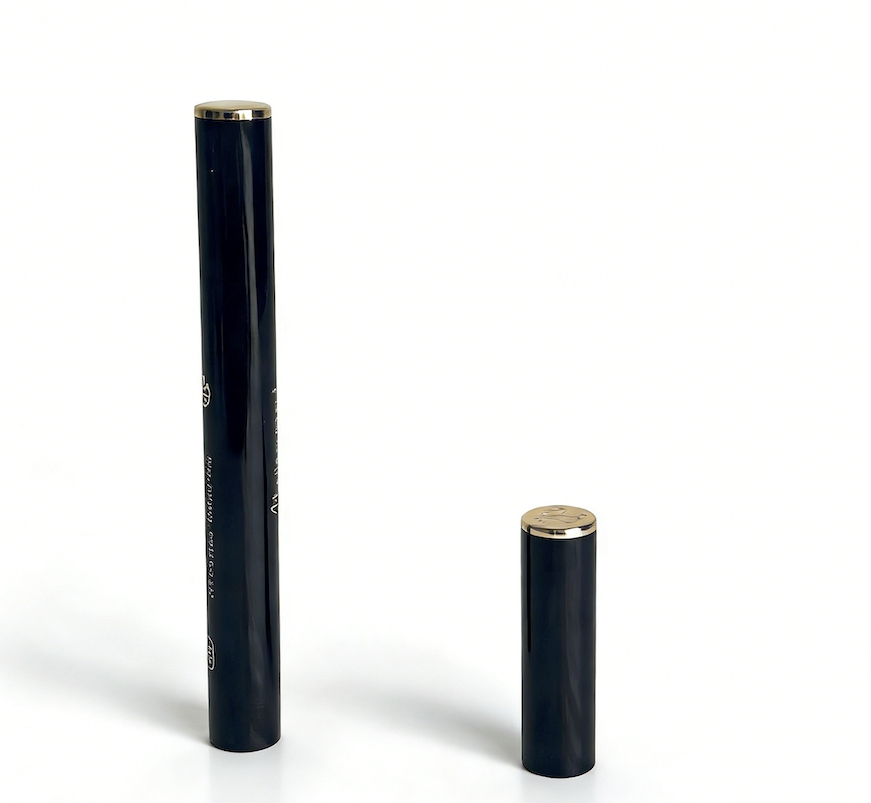
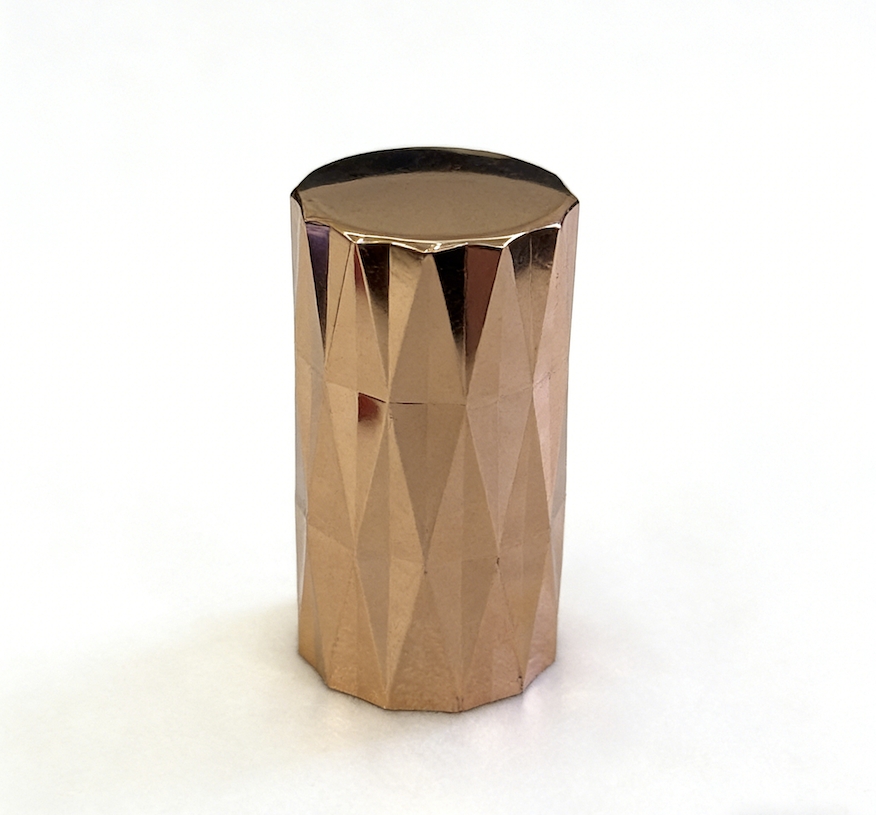
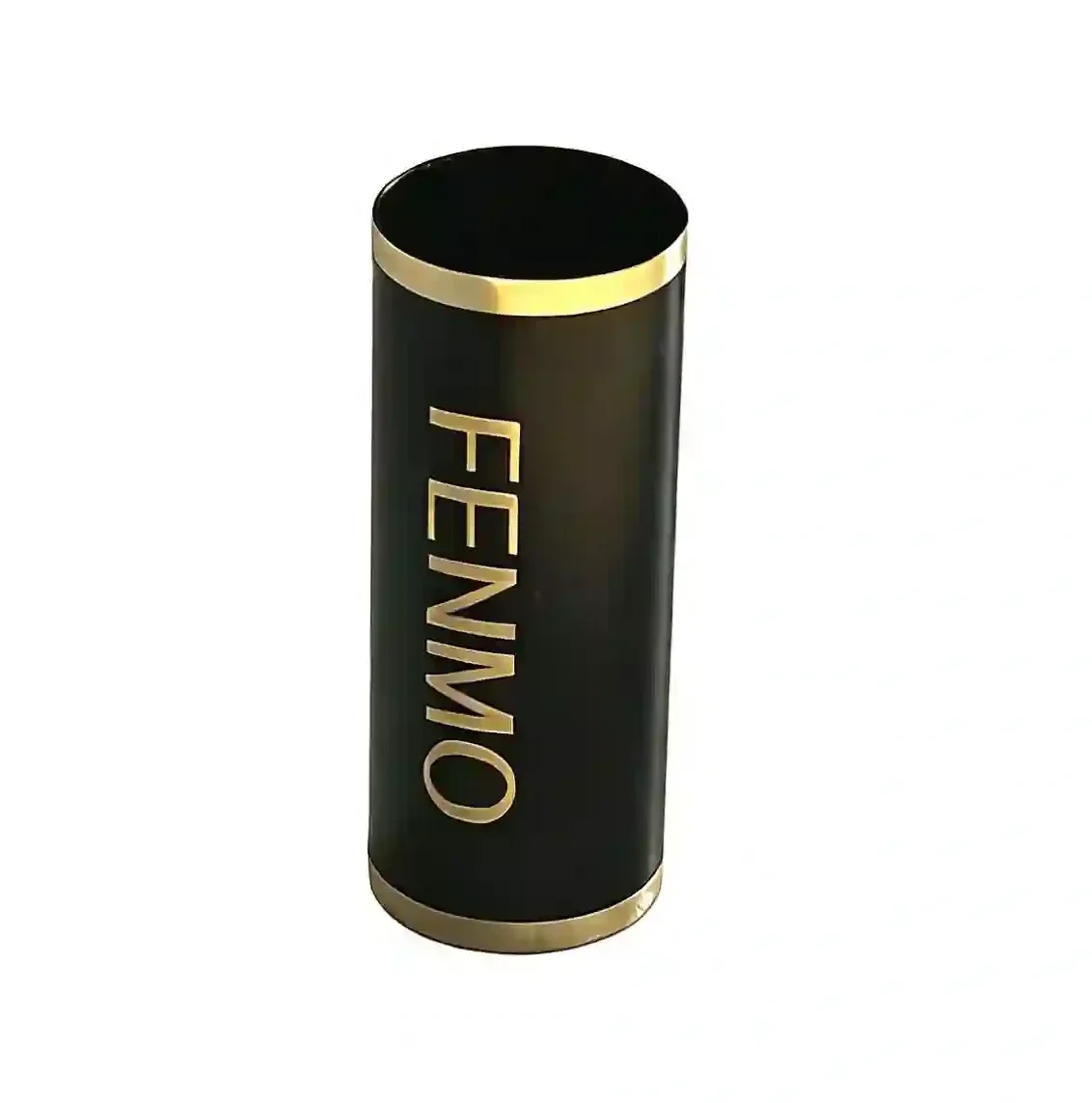
Modern aluminum eyeliner tubes support an impressive range of customization options. Silk-screen printing, hot stamping, digital printing, and heat transfer printing can all be applied to create vibrant, durable branding. Finishes include anodized colors, matte or gloss coatings, metallization, and even soft-touch rubberized surfaces. Caps can be aluminum or plastic, in a variety of styles from screw-on to flip-top.
The tube itself can be produced in multiple diameters and capacities—typically ranging from 3ml to 5ml for eyeliner applications, though larger sizes are available. Nozzle types can be customized to match the product’s viscosity and desired application method. Whether you’re launching a precision liquid liner or a creamy gel formula, there’s an aluminum tube configuration that fits.
And let’s not forget the branding opportunity. A beautifully finished aluminum eyeliner tube doesn’t just protect your formula—it becomes part of your brand identity. It sits on bathroom counters and in makeup bags, visible and tactile, reinforcing your brand’s commitment to quality with every use.
The Economic Reality: Is It Worth the Investment?
Let’s address the elephant in the room. Aluminum eyeliner tubes cost more than plastic. There’s no getting around that. Aluminum prices can be volatile, and the manufacturing process—impact extrusion, internal lining, decoration—is more complex than injection-molding plastic.
But framing this as purely a cost decision misses the bigger picture. What does it cost you when a customer opens a dried-out eyeliner and tosses it in the trash? What does it cost when negative reviews pile up about a product that doesn’t perform as promised? What does it cost when a sustainability-conscious consumer chooses a competitor because your packaging isn’t recyclable?
The aluminum eyeliner tube is an investment in product integrity, brand perception, and customer retention. It protects your formula from degradation, which means fewer returns, less waste, and happier customers. It signals premium quality, which justifies a higher price point and builds brand equity. And it delivers on sustainability, which is increasingly becoming a deciding factor for modern consumers.
The global cosmetic aluminium tubes market is projected to reach USD 2.16 billion by 2032, with a CAGR of 6.25%. Brands aren’t making this shift because they like spending more money. They’re making it because the ROI—in product performance, customer satisfaction, and brand loyalty—is undeniable.
What to Look for in an Aluminum Eyeliner Tube Supplier
If you’re convinced that an aluminum eyeliner tube is the right choice for your brand, the next step is finding the right manufacturing partner. Not all aluminum tubes are created equal, and the quality of your packaging depends heavily on the supplier you choose.
Here are the key factors to evaluate:
Internal lining quality. The epoxy or latex lining inside the tube is what prevents chemical interaction between the aluminum and your formula. Make sure your supplier uses food-grade or cosmetic-grade linings that have been tested for compatibility with your specific ingredients.
Barrier performance testing. Reputable manufacturers test each tube for air leaks and seal strength. Ask about their quality control protocols and whether they can provide oxygen transmission rate data for their tubes.
Customization capabilities. Can they handle your desired decoration techniques—silk screening, hot stamping, digital printing? Do they offer the finish options you need? What about nozzle types and cap styles?
Sustainability credentials. Are they using recycled aluminum? Do they have certifications like ISO 9001 or ISO 14001? Can they provide documentation on the recyclability of their tubes?
MOQ and lead time. Minimum order quantities and production timelines vary widely between suppliers. Make sure their MOQ aligns with your production volume and that their lead time works with your launch schedule.
Real-World Applications: Who’s Using Aluminum Eyeliner Tubes?
The adoption of aluminum tubes in cosmetics is accelerating, and eyeliner is no exception. High-end and indie brands alike are making the switch, driven by the combination of barrier protection, premium aesthetics, and sustainability.
For example, Homchoe Packaging offers slim aluminum tubes specifically designed for eyeliner, eyelash growth serum, and eyelash glue. These tubes provide durability and protection against impacts, pressure, and exposure to air and light—ensuring that the product reaches the consumer in perfect condition.
Tubex has taken the concept further with its MonoSense tube, an all-aluminum applicator tube made from 100% recycled material. Designed for eye and lip products, it features an integrated applicator, high dispensing efficiency, and outstanding barrier properties. The tube’s monomaterial construction eliminates multi-material components, making it easy to recycle without sacrificing performance.
These aren’t experimental products—they’re commercially available solutions that brands are using right now to differentiate themselves in a crowded market.
The Bottom Line: Freshness, Performance, and Perception
So, can an aluminum eyeliner tube keep your formula fresh? The evidence is clear: yes, and it does so better than any alternative on the market. Its superior barrier properties protect against the three enemies of cosmetic stability—oxygen, light, and moisture. Its collapsible design eliminates suck-back, ensuring that the product stays fresh from first use to last. Its premium feel and tactile experience elevate the user experience, turning a routine application into a moment of luxury. And its infinite recyclability speaks directly to the values of today’s conscious consumer.
But the value of an aluminum eyeliner tube goes beyond freshness. It’s about protecting your brand’s reputation. It’s about delivering on the promise of quality that your customers expect. It’s about making a statement that you care about the details—and that you’re willing to invest in materials that reflect that care.
The beauty industry is moving toward higher standards. Consumers are more educated, more discerning, and more demanding than ever before. They can tell the difference between packaging that’s designed to impress and packaging that’s designed to just get by. An aluminum eyeliner tube sends a clear message: this product is worth your attention.
Ready to Make the Switch?
Your formula deserves better than plastic. Your customers deserve better than dried-out, degraded product. And your brand deserves the premium positioning that comes with choosing the best.
If you’re ready to explore how an aluminum eyeliner tube can protect your formula, elevate your brand, and delight your customers, now is the time to act. The market is moving—don’t get left behind in plastic.
Contact a packaging specialist today to discuss your specific needs, request samples, and start the conversation about making the switch to aluminum. Your formula—and your customers—will thank you.