
Abstract
For beauty entrepreneurs and product developers, eyebrow pencil packaging is far more than a container — it is a functional asset, a brand signal, and a compliance requirement. The packaging encases a precision cosmetic instrument that consumers use daily, often under variable conditions of humidity, temperature, and mechanical stress. A poorly engineered casing leads to lead breakage, formula oxidation, and brand credibility loss. A well-engineered one drives repeat purchase and retail shelf performance.
This guide breaks down the critical design standards, material choices, structural mechanics, and commercial considerations that define high-quality eyebrow pencil packaging. Whether you are sourcing for a startup SKU launch or scaling an established beauty line, the benchmarks outlined here will help procurement and R teams evaluate suppliers with technical precision — moving beyond price comparisons toward performance-driven sourcing decisions.
1. Core Material Standards for Eyebrow Pencil Packaging
1.1 Primary Packaging Materials & Performance Benchmarks
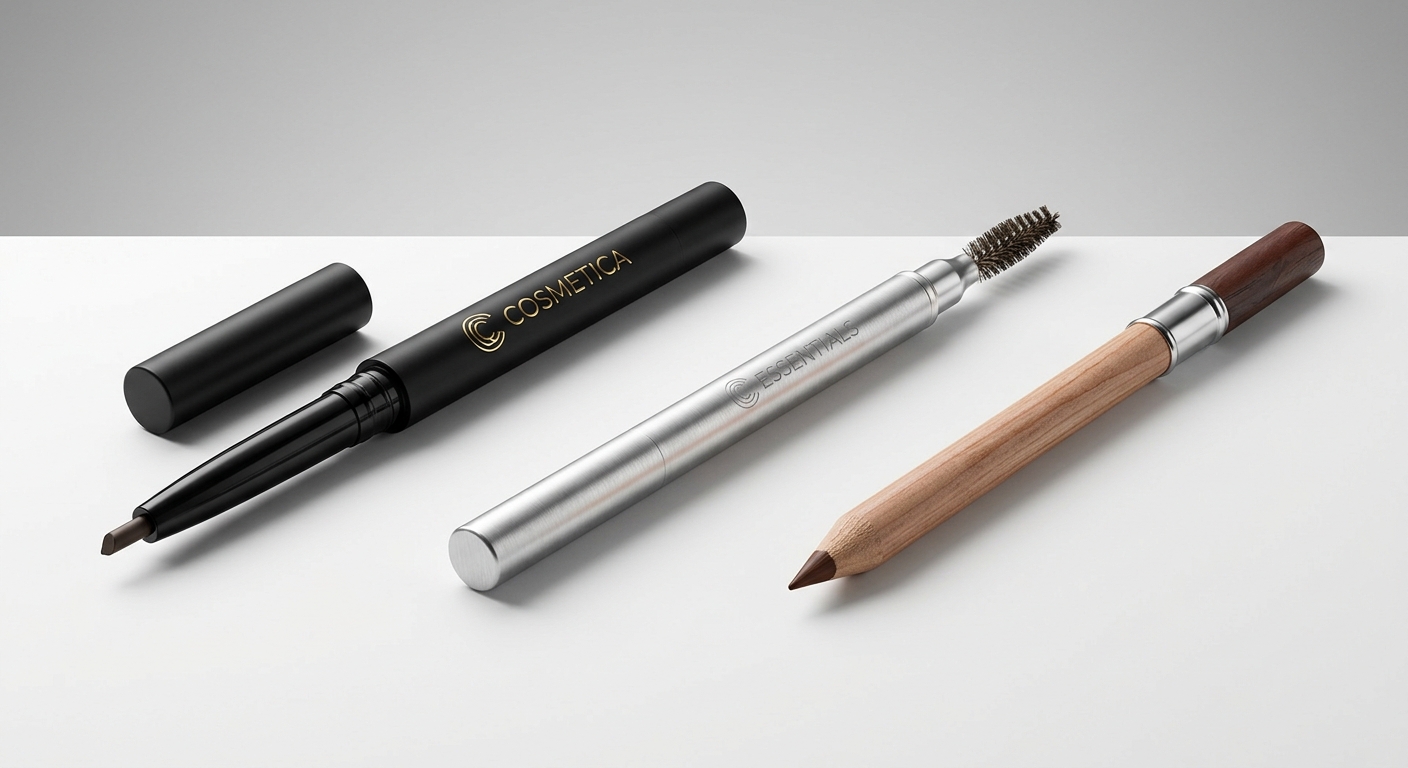
The structural integrity of eyebrow pencil packaging begins with material selection. Three materials dominate the professional cosmetics supply chain, each with distinct performance profiles:
ABS (Acrylonitrile Butadiene Styrene) is the industry workhorse for twist-up and retractable barrel formats. Its high impact resistance (notched Izod impact strength: ~200–250 J/m), dimensional stability, and compatibility with electroplating and UV coating make it the preferred choice for mid-to-premium tier brands. ABS maintains structural integrity across a temperature range of -20°C to 80°C, critical for products distributed across diverse climates.
PP (Polypropyleen) offers excellent chemical resistance and is lighter than ABS, making it cost-effective for high-volume, entry-level SKUs. Its lower surface energy requires plasma or corona pre-treatment before printing — a manufacturing step that should be confirmed with suppliers.
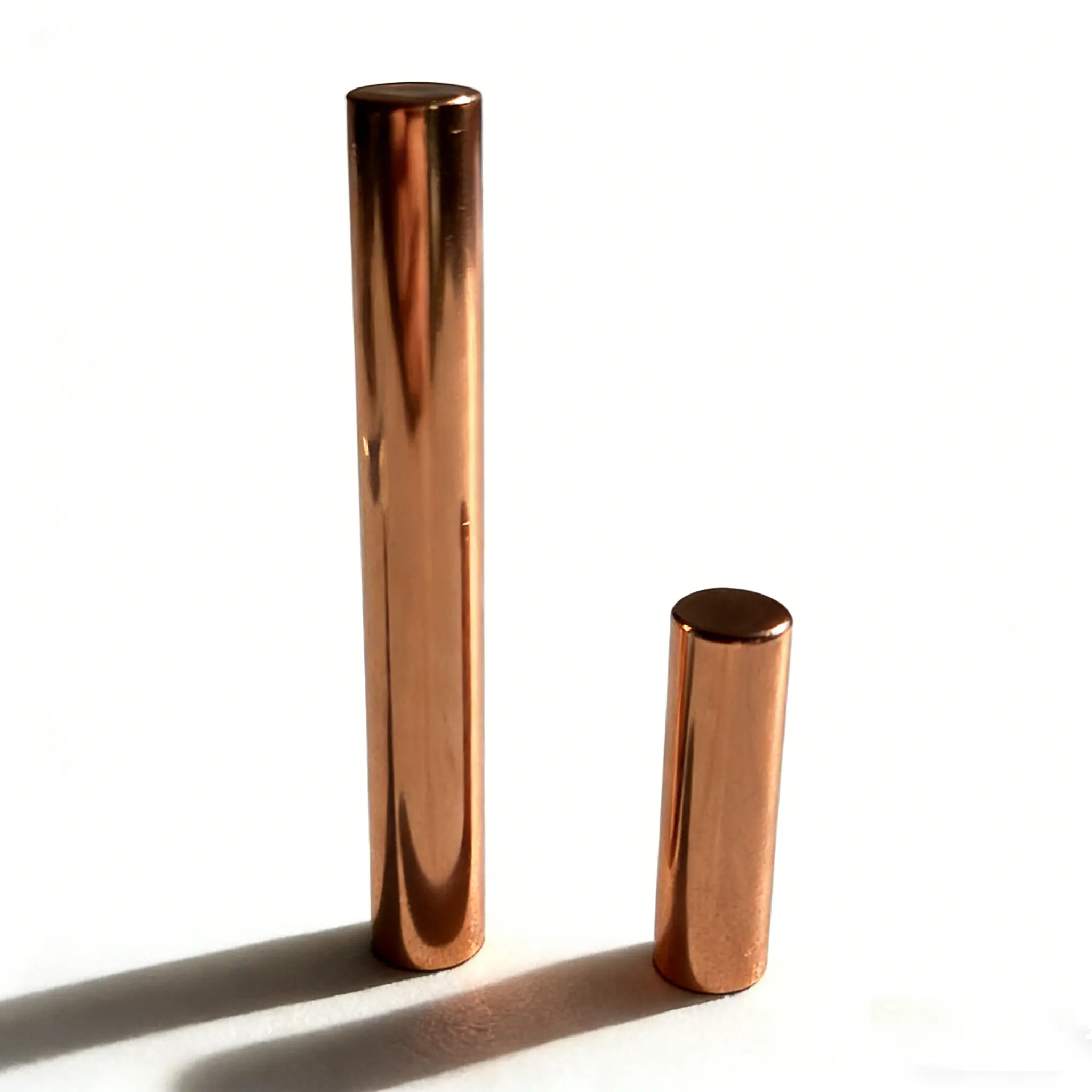
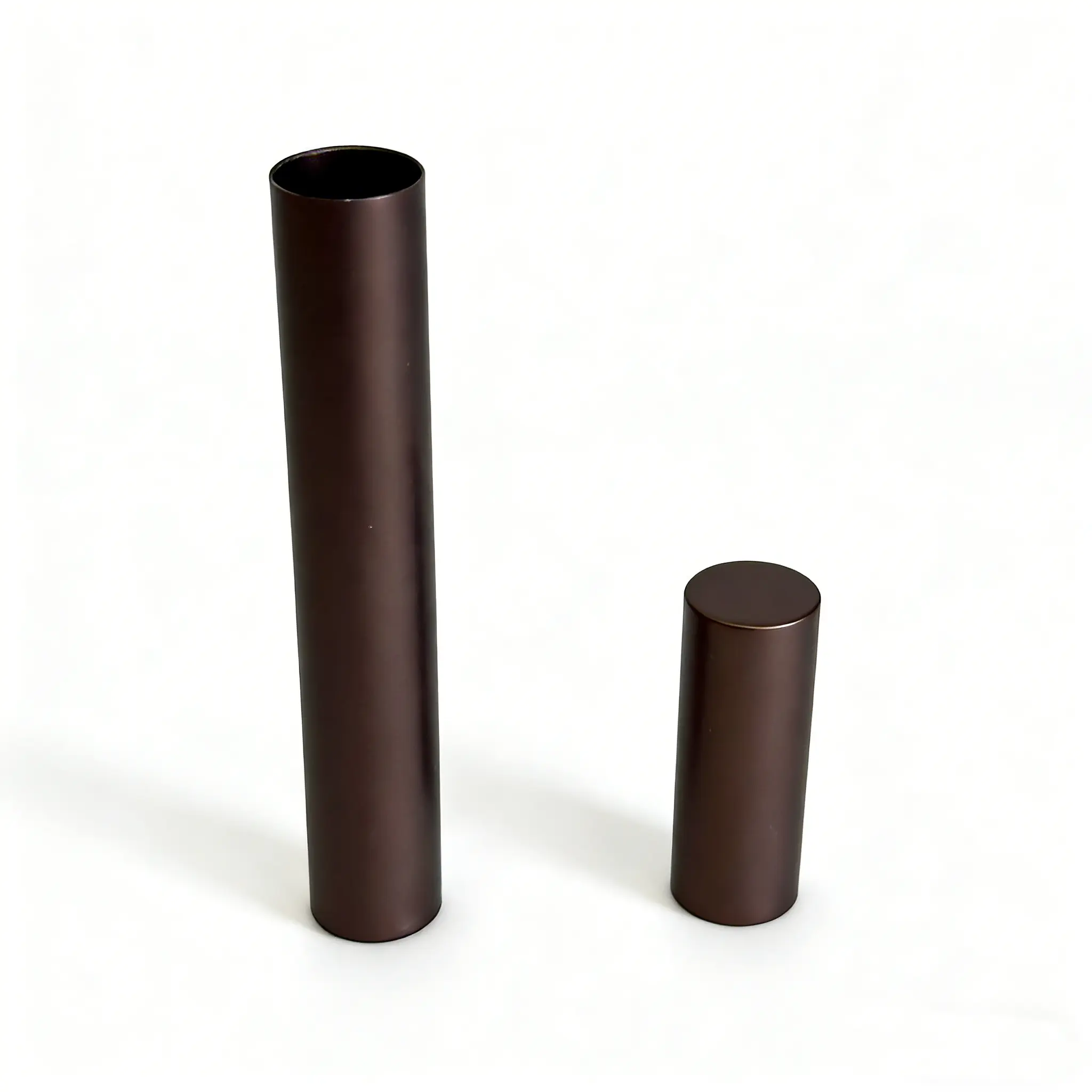
Aluminum alloy barrels deliver a premium tactile experience and superior moisture barrier performance. Anodized aluminum provides corrosion resistance while enabling precise color finishes. The trade-off is higher tooling cost and increased unit weight, which affects shipping economics at scale.
For cosmetic-grade compliance, all primary materials must demonstrate migration limits below EU Regulation 10/2011 thresholds for plastic food contact materials (often adopted as a proxy standard in cosmetics), with no detectable heavy metals (lead, cadmium, mercury) per REACH Annex XVII.
1.2 Sustainable & Eco-Friendly Material Alternatives
Sustainability is no longer a positioning differentiator — it is increasingly a procurement prerequisite, particularly for brands targeting EU and North American retail channels.
PCR (Post-Consumer Recycled) plastics — typically PCR-ABS or PCR-PP — reduce virgin resin dependency by 30–70% without significant compromise to mechanical properties, provided the PCR content is certified (e.g., SCS Recycled Content Standard). Expect a 10–20% cost premium over virgin-grade equivalents.
Biodegradable casings made from PLA (polylactic acid) composites or wheat-straw-filled PP offer compostability credentials, though PLA variants require industrial composting conditions (58°C+) to degrade within certification timelines — a fact that must be clearly communicated in product labeling.
FSC-certified wood remains the standard for traditional sharpened eyebrow pencils, offering natural brand aesthetics and genuine end-of-life recyclability. Wood-cased pencils carry lower tooling costs and suit artisan or clean-beauty brand positioning, though they require stricter humidity control in storage and transit.
2. Functional Design Elements That Define Quality
2.1 Mechanical Precision: Twist Mechanism, Cap Fit & Lead Retention
The mechanical performance of eyebrow pencil packaging is where quality separates from commodity. For twist-up (rotary advance) formats, torque consistency is the primary engineering benchmark. A well-calibrated mechanism should advance the lead at a controlled rate of 0.3–0.5mm per full rotation, with torque resistance between 0.08–0.15 N·m to prevent accidental advancement in-bag while remaining operable with one hand.
Cap seal tolerance directly determines formula longevity. A cap with less than 0.2mm radial clearance creates an effective vapor barrier that slows formula oxidation and prevents contamination. Suppliers should be able to provide cap retention force data — a minimum pull-off force of 8–12N is the accepted industry benchmark for standard retail formats.
Anti-breakage lead suspension design is critical for waxy or pigment-dense eyebrow formulas. The lead channel should incorporate a tapered bore that distributes mechanical stress radially rather than concentrating it at the lead tip. This is particularly important for retractable formats where the lead protrudes beyond the barrel during use.
2.2 Ergonomics, Grip Profile & Applicator Integration
Barrel diameter is a direct determinant of application control. Professional-grade eyebrow pencils typically range from 8mm to 11mm outer diameter — narrow enough for fine-line precision but substantial enough to prevent finger fatigue during detailed work. Hexagonal or faceted barrel profiles prevent rolling on flat surfaces, a functional detail that resonates in retail presentation.
Spoolie and brush-end integration is now a baseline consumer expectation in the mid-to-premium segment. Dual-end designs require careful weight distribution — the combined center of gravity should fall within the middle 40% of the barrel length to maintain comfortable handling. Spoolie bristle density (typically 200–280 filaments per row) and bristle hardness should be specified in supplier contracts.
Surface texture — whether soft-touch rubber overmolding, matte PP, or knurled aluminum — affects both grip performance and perceived quality. Soft-touch coatings add approximately $0.05–0.15 per unit but measurably increase consumer satisfaction scores in tactile testing.
| Dimensie | Wood Pencil | Twist-Up Retractable | Auto-Advance |
|---|---|---|---|
| Material Options | Cedar, FSC wood | ABS, PP, Aluminum | ABS, PP |
| Mechanical Complexity | Laag | Middel | High |
| MOQ Reference | 5.000–10.000 eenheden | 10,000–30,000 units | 20,000–50,000 units |
| Positionering van het merk | Clean beauty, artisan | Mass-market to premium | Premium, professional |
| Compliance Certifications | FSC, PEFC | REACH, RoHS | REACH, RoHS |
3. Regulatory Compliance & Labeling Requirements
3.1 Global Cosmetic Packaging Compliance Standards
Packaging material compliance is non-negotiable for brands entering regulated markets. The three primary regulatory frameworks are:
EU Cosmetics Regulation 1223/2009 prohibits the use of specific colorants, preservatives, and UV filters in packaging materials that may migrate into the formula. Suppliers must provide a Declaration of Conformity (DoC) and, where applicable, material safety data sheets confirming compliance with Annex II prohibited substances.
US FDA 21 CFR governs color additives and indirect food contact materials. While cosmetic packaging is not subject to premarket approval, brands bear responsibility for ensuring packaging materials do not contaminate the product. FDA’s Voluntary Cosmetic Registration Program (VCRP) does not substitute for material-level due diligence.
China GB standards — specifically GB/T 34857 for cosmetic packaging migration testing — are mandatory for products entering the Chinese market. China’s cross-border e-commerce regulations (CBEC) add a layer of documentation requirements, including Chinese-language labeling and NMPA registration for certain product categories.
Request third-party test reports (SGS, Intertek, Bureau Veritas) confirming compliance before committing to production runs.
3.2 Labeling Real Estate & Print Durability Standards
Eyebrow pencil packaging presents limited label surface area, making font size and information hierarchy critical. EU Regulation 1223/2009 mandates a minimum 0.75mm font height for ingredient listings (INCI names) on primary packaging. US FDA requires net weight declaration in both metric and US customary units.
Print durability must be validated through rub-resistance testing per ISO 105-X12 (dry rub) and ISO 105-E04 (wet rub). Hot-stamp foil finishes should pass a minimum 50-cycle dry rub without visible degradation. UV-cured screen printing offers superior chemical resistance compared to pad printing and is recommended for surfaces that contact hands or retail fixtures regularly.
4. Brand Differentiation & Commercial Packaging Strategy
4.1 Custom Printing, Finishing & Visual Identity Alignment
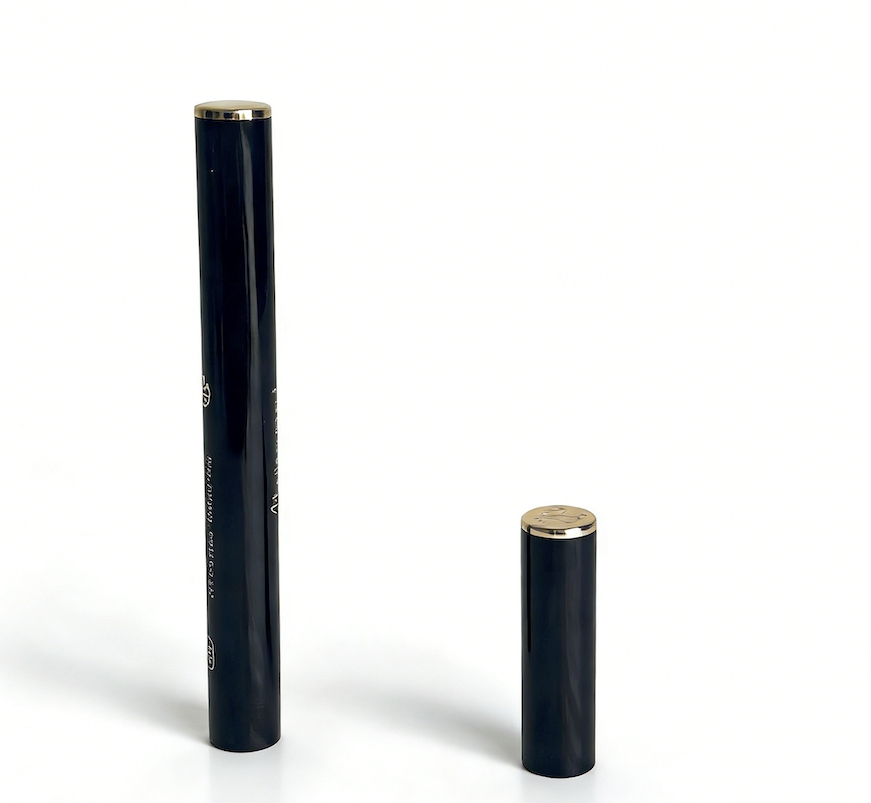
Surface finish is the primary visual language of brand tier. Matte soft-touch UV coating communicates luxury minimalism and is the dominant finish in the $15–$40 retail segment. Gloss UV is cost-effective and suited for vibrant color-brand identities. Hot foil stamping (gold, silver, holographic) adds perceived value at approximately $0.08–0.20 per unit and is particularly effective on dark-colored barrels.
Pantone matching should be specified with Delta E tolerance ≤ 1.5 for premium brand programs. Suppliers operating color-managed workflows with spectrophotometer verification can reliably hold this tolerance across production batches.
Custom mold tooling enables proprietary barrel shapes that become brand equity assets — recognizable on shelf without requiring the consumer to read a logo. Tooling investment typically ranges from $3,000–$15,000 USD depending on mechanism complexity and mold steel grade.
4.2 Packaging-to-Retail Fit: Display, Shipping & MOQ Considerations
Shelf-ready packaging (SRP) dimensions should be designed in parallel with the primary package, not as an afterthought. Standard peg-hook eyebrow pencil display requires a header card hole of 4.75mm diameter (Euroslot standard) and a minimum header card thickness of 350gsm to prevent hook fatigue under retail conditions.
Drop-test standards — ISTA 2A or ASTM D4169 — should be applied to both individual units and master carton configurations before production approval. A standard drop test at 1.0m onto a concrete surface should produce zero functional failures (mechanism jam, cap loss, lead breakage).
MOQ thresholds: Stock packaging programs typically start at 1,000–3,000 units. Semi-custom (stock mold, custom print) ranges from 5,000–10,000 units. Fully custom proprietary mold programs require 20,000–50,000 units minimum to amortize tooling costs effectively.
FAQ
Q1: What is the minimum order quantity (MOQ) for fully custom eyebrow pencil packaging with proprietary molds?
Proprietary mold programs typically require a minimum of 20,000–50,000 units per SKU to justify tooling investment, which ranges from $3,000 to $15,000 USD. Some suppliers offer tooling amortization programs that lower the per-unit threshold for brands committing to multi-season production agreements. For early-stage brands, semi-custom programs using existing molds with custom print and color offer a lower-risk entry point at 5,000–10,000 units.
Q2: How do I verify that a packaging supplier’s materials meet FDA or EU cosmetic-grade compliance requirements?
Request third-party laboratory test reports from accredited bodies (SGS, Intertek, TÜV) confirming material composition, migration testing results, and absence of REACH SVHC substances. For EU market entry, require a signed Declaration of Conformity referencing Regulation 1223/2009. For US distribution, request a written material safety statement confirming no FDA-prohibited colorants or indirect food contact violations.
Q3: What structural tests should eyebrow pencil packaging pass before mass production approval?
Pre-production qualification should include: cap retention force testing (minimum 8–12N pull-off), twist mechanism torque consistency (±10% variance across 100-unit sample), drop testing per ISTA 2A at 1.0m, temperature cycling (-10°C to 45°C, 48-hour cycle), and print durability per ISO 105-X12 dry rub (50 cycles minimum). Request golden sample approval with documented test results before issuing production PO.
Conclusie
High-quality eyebrow pencil packaging integrates material science, mechanical precision, regulatory compliance, and brand strategy into a single deliverable. The benchmarks outlined in this guide — from ABS torque tolerances and PCR certification requirements to Pantone Delta E standards and ISTA drop-test protocols — provide procurement teams and product developers with a structured evaluation framework that goes beyond price comparison.
Suppliers who can demonstrate compliance across all four dimensions (materials, function, regulation, and commercial scalability) are partners capable of supporting brand growth from initial launch through retail expansion. Evaluate packaging decisions with the same rigor applied to formula development, and the result will be a product that performs on shelf, travels safely through the supply chain, and communicates brand quality at the point of purchase.