
Resumen
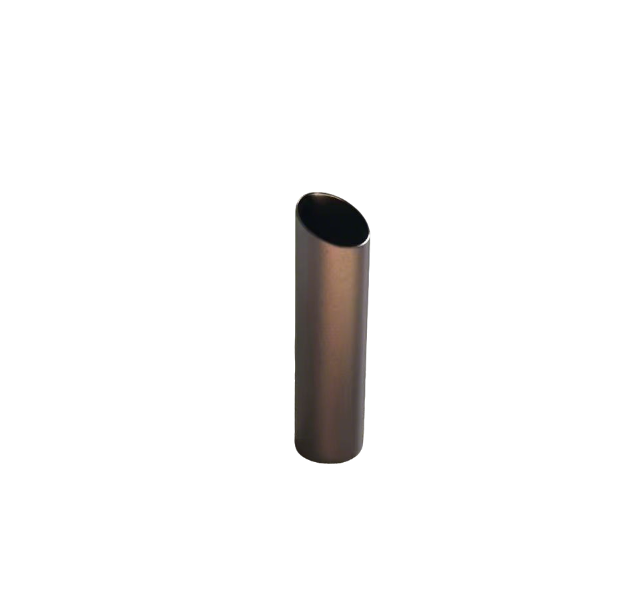
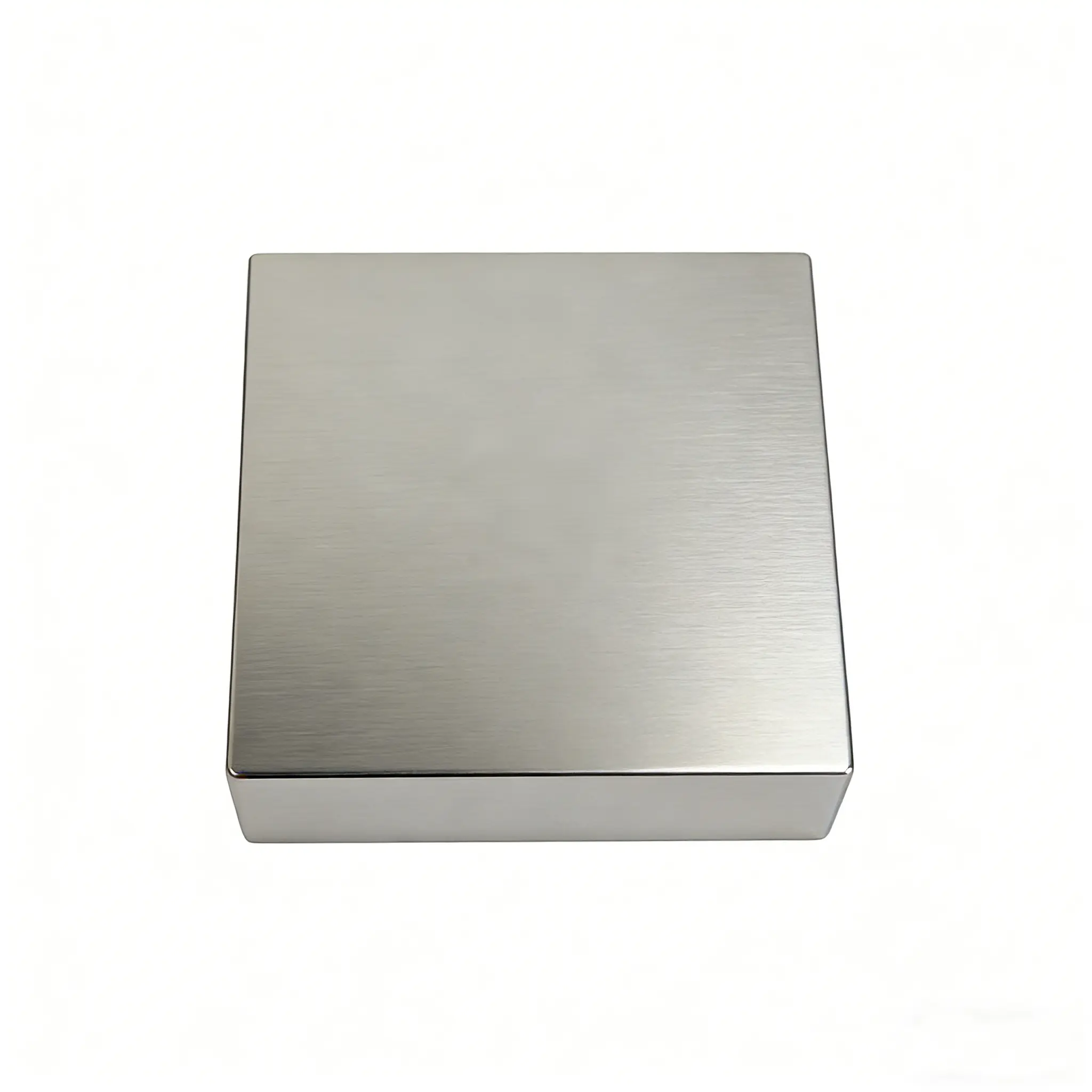
Material selection for fundas para hombros de perfume is one of the most consequential decisions in luxury fragrance packaging development. The choice between anodized aluminum and heavy zinc alloy affects not only the tactile and visual premium of the final product but also regulatory compliance pathways, tooling investment, and per-unit landed cost.
This article delivers a structured, four-dimensional comparison — physical properties, surface finishing processes, supply chain compliance, and application strategy — designed specifically for B2B packaging buyers, brand engineers, and sourcing managers evaluating components for new fragrance launches or existing line extensions. Whether your priority is sustainable positioning with lightweight aluminum or ultra-premium shelf presence with zinc alloy die-casting, the data and decision frameworks below will help you align material choice with commercial objectives before committing to tooling.
1. Material Fundamentals: Anodized Aluminum vs. Heavy Zinc Alloy
1.1 Metallurgical Properties & Structural Performance
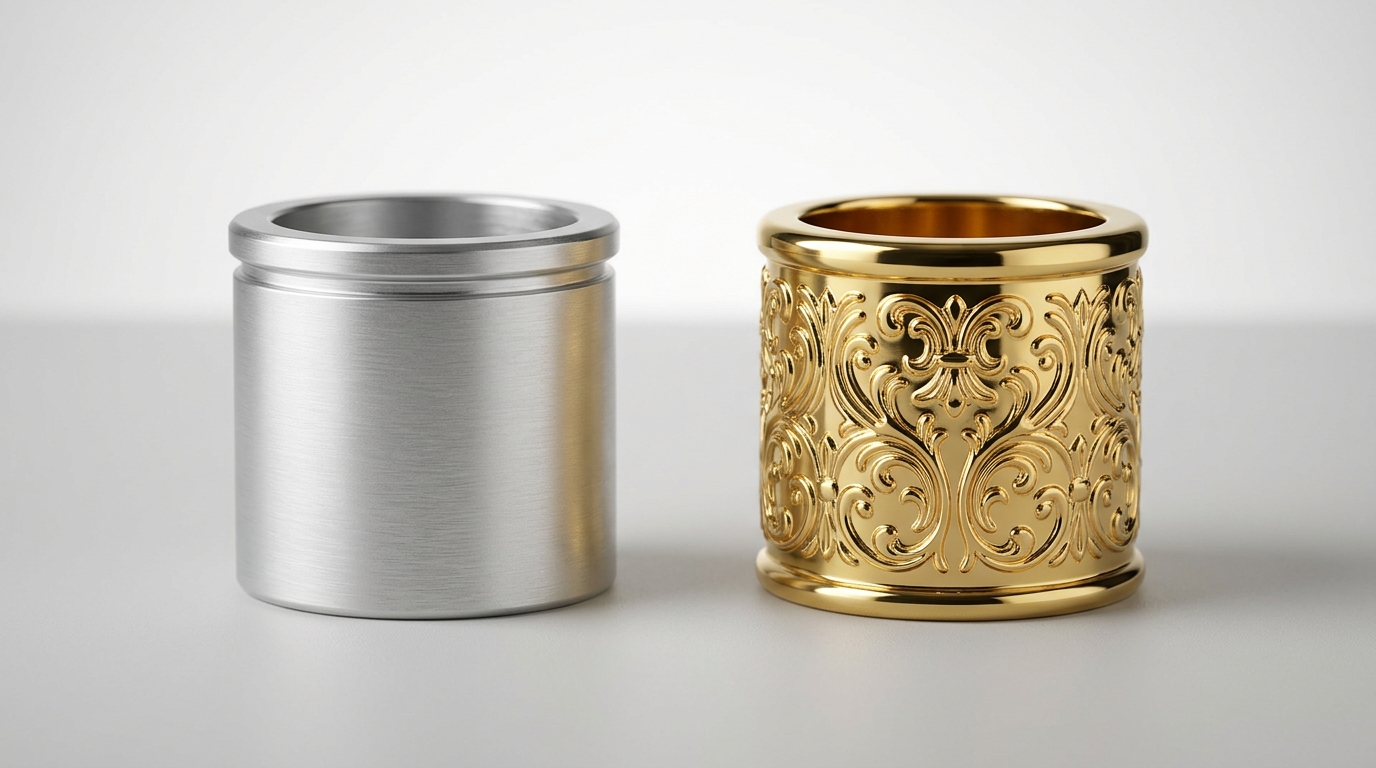
Aluminum alloys used in fundas para hombros de perfume — typically 6063-T5 or 6061-T6 grades — offer a density of approximately 2.70 g/cm³, making them roughly 2.5× lighter than zinc-based alternatives. Surface hardness after Type III hard anodizing reaches 350–500 HV, providing excellent scratch resistance without the need for additional coating layers. Wall thickness tolerances for CNC-machined or extruded aluminum sleeves typically range from 0.8 mm to 1.5 mm, enabling precise, repeatable geometries across high-volume production runs.
Heavy zinc alloy (primarily Zamak 3 or Zamak 5) presents a markedly different metallurgical profile. With a density of 6.6–6.9 g/cm³, zinc die-cast components deliver substantial mass in compact geometries. Hardness values of 80–120 HV (Brinell) are lower than hard-anodized aluminum, meaning zinc alloy surfaces depend more heavily on applied coatings — electroplating or PVD — for wear resistance. Die-cast wall thicknesses commonly range from 1.2 mm to 2.5 mm, and the process accommodates intricate undercuts and embossed relief patterns that CNC aluminum cannot easily replicate at scale.
Corrosion resistance is another key differentiator. Anodized aluminum achieves salt spray resistance exceeding 1,000 hours (ASTM B117), while zinc alloy components, if properly electroplated, typically reach 500–800 hours — adequate for retail environments but requiring more rigorous coating quality control in humid climates.
1.2 Weight & Tactile Perception in Luxury Packaging
Consumer neuroscience research consistently links product weight to perceived quality. A zinc alloy perfume shoulder sleeve weighing 18–30 g creates an immediate “premium hand-feel” that reinforces high price-point positioning at the point of sale. This weight premium is a deliberate design tool employed by heritage fragrance houses — the satisfying resistance when lifting a bottle signals material substance to the end consumer.
Aluminum shoulder sleeves, by contrast, typically weigh 6–12 g for equivalent geometries. While lighter, this characteristic aligns strategically with contemporary sustainable luxury narratives, where reduced material mass communicates environmental responsibility without sacrificing visual refinement.
Material Specification Comparison Table
| Dimensión | Anodized Aluminum | Heavy Zinc Alloy |
|---|---|---|
| Density (g/cm³) | 2.70 | 6.6 – 6.9 |
| Surface Hardness (HV) | 350 – 500 (Type III) | 80 – 120 (substrate) |
| Resistencia a la corrosión | >1,000 hrs salt spray | 500 – 800 hrs (plated) |
| Typical Wall Thickness (mm) | 0.8 – 1.5 | 1.2 – 2.5 |
| Typical Unit Weight (g) | 6 – 12 | 18 – 30 |
| Standard MOQ | 500 – 1,000 pcs | 1,000 – 3,000 pcs |
| Reference Unit Cost (USD) | $0.80 – $2.50 | $1.80 – $5.50 |
2. Surface Finishing Processes & Visual Outcomes
2.1 Anodizing Techniques for Aluminum Shoulder Sleeves
Anodizing transforms the aluminum surface into a durable aluminum oxide layer through an electrochemical process, available in two primary industrial grades relevant to perfume packaging components.
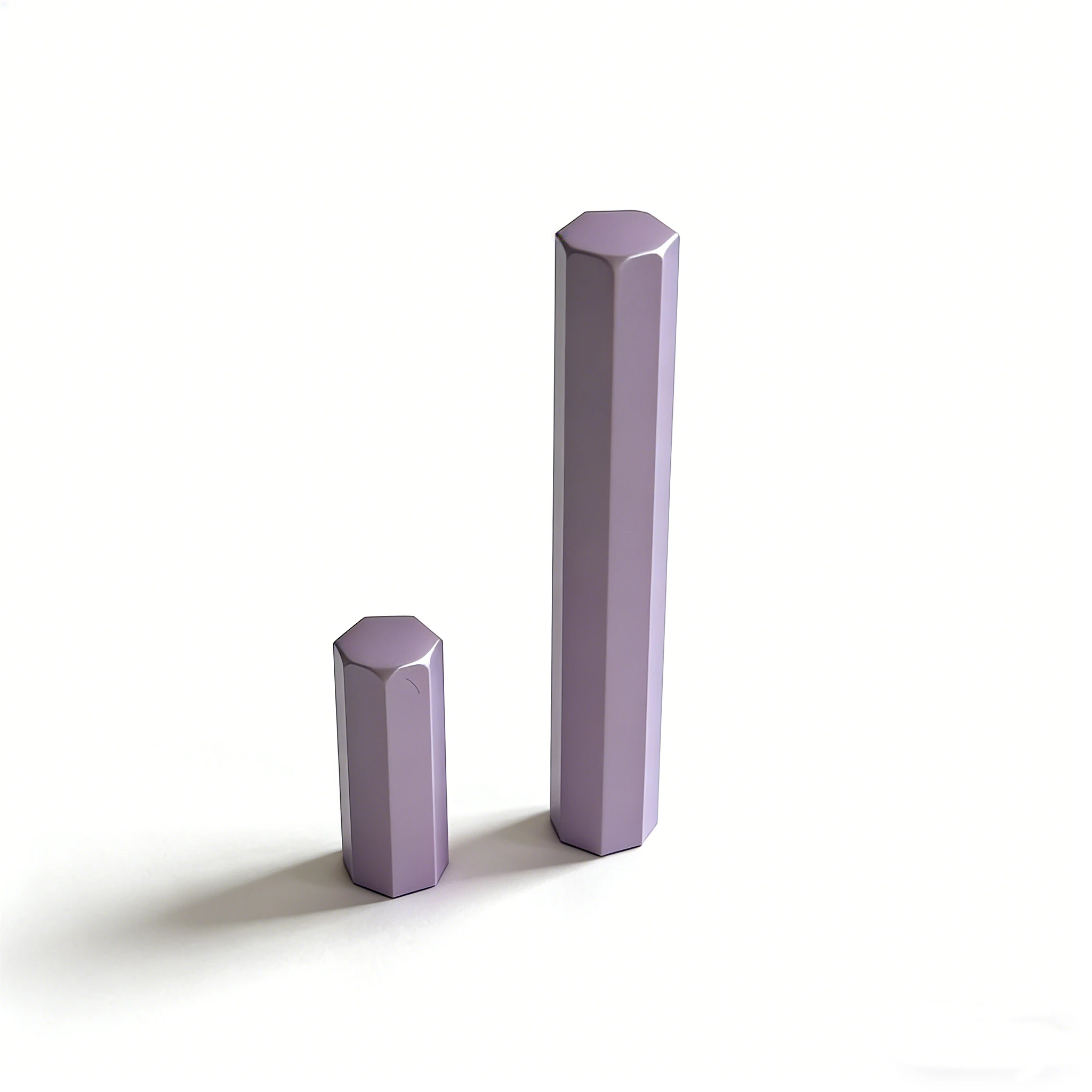
Type II (Conventional) Anodizing produces an oxide layer of 5–25 μm, sufficient for decorative applications. It supports a broad color gamut through integral dyeing — including deep blacks, champagne golds, and matte silvers — and achieves a consistent matte-to-satin finish that photographs exceptionally well for e-commerce and retail imagery.
Type III (Hard) Anodizing builds layers of 25–100 μm, dramatically increasing surface hardness and abrasion resistance. This process is preferred for shoulder sleeves on high-turnover retail products where repeated handling is expected. The trade-off is a slightly more limited color range, with darker tones being more achievable than bright pastels.
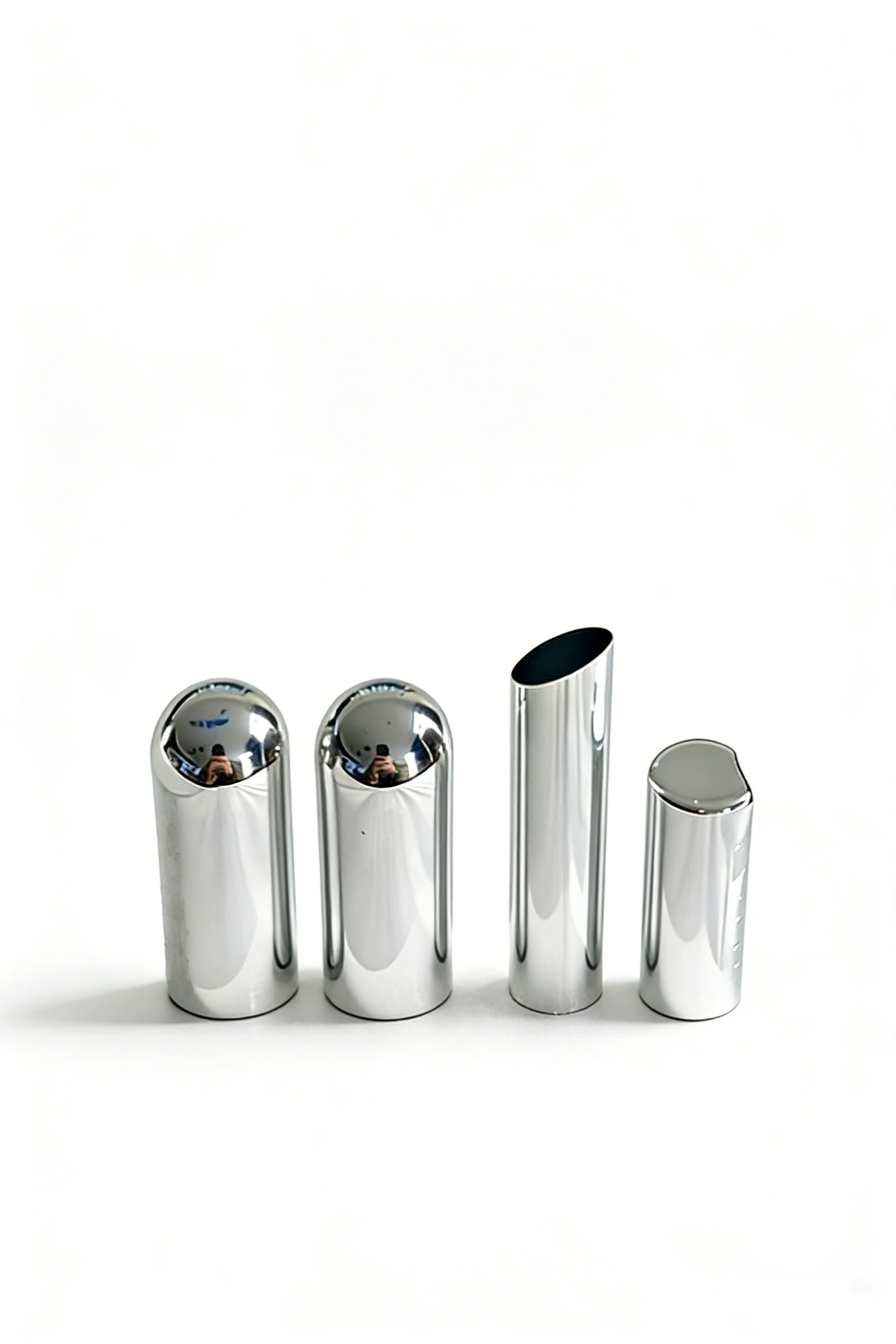
Mirror-polished aluminum, anodized with a clear Type II coat, delivers a chrome-like aesthetic at significantly lower cost than electroplated zinc. However, achieving true optical mirror finishes requires pre-polishing to Ra ≤0.05 μm, adding processing time and cost. Matte brushed finishes remain the most commercially popular choice for aluminum perfume shoulder sleeves due to their fingerprint resistance and contemporary visual identity.
2.2 Electroplating & PVD Coating on Zinc Alloy Components
Zinc alloy die-cast shoulder sleeves are almost universally finished with applied surface coatings. The most common commercial options are:
- Galvanoplastia dorada (0.05–0.5 μm Au over nickel undercoat): Delivers warm, high-reflectivity finish associated with classic luxury fragrance aesthetics. Adhesion tested per ISO 2819.
- Chrome electroplating (decorative hex-chrome or trivalent chrome): Produces cool, high-gloss mirror surfaces. Hexavalent chrome is increasingly restricted under RoHS/REACH; trivalent alternatives are now the industry standard.
- PVD (Physical Vapor Deposition) coating: Offers superior abrasion resistance (3–5× harder than electroplating), wider color options including gunmetal, rose gold, and matte black, and eliminates hazardous plating bath chemicals. PVD-coated zinc alloy sleeves demonstrate measurably lower surface defect rates in QC audits, typically achieving <0.3% rejection rate versus 0.8–1.5% for conventional electroplating lines.
Surface defect control — pinholes, blistering, peeling — is the primary quality challenge in zinc alloy finishing and requires rigorous incoming substrate inspection and plating bath chemistry management.
3. Compliance, Safety & Supply Chain Considerations
3.1 Regulatory Standards for Perfume Packaging Components
Both material families must navigate an increasingly stringent global regulatory environment for cosmetic packaging components.
REACH (EU Regulation 1907/2006) restricts substances of very high concern (SVHCs) including lead, cadmium, and hexavalent chromium. Zinc alloy formulations must confirm lead content below 0.1% by weight, and any chromate conversion coatings must use trivalent-only processes for EU market entry.
RoHS Directive (2011/65/EU) applies to packaging components that may contact electronic retail display systems, restricting the same heavy metals. While not always directly applicable to fragrance packaging, many EU luxury retailers require RoHS-compliant documentation as a procurement condition.
EN 1811 (Nickel Release) is critical for zinc alloy components with nickel undercoats in electroplating stacks. The standard limits nickel release to 0.5 μg/cm²/week for skin-contact items. Perfume shoulder sleeves, while not worn continuously, may face this requirement from premium department store buyers as a precautionary specification.
FDA Indirect Food Contact guidelines are relevant for US market distribution where packaging components are manufactured in shared facilities. Aluminum anodized components typically present lower compliance risk in this context.
3.2 Lead Time, Tooling Cost & Supplier Qualification
Tooling investment diverges significantly between the two materials. Aluminum CNC machining requires no dedicated tooling for prototype phases, enabling first samples within 10–15 business days at minimal cost. Extrusion dies for aluminum sleeves cost approximately $800–$2,500 and support millions of cycles. Zinc alloy pressure die-casting molds represent a substantially higher capital commitment: $3,500–$12,000 per cavity depending on complexity, with typical prototype lead times of 25–40 business days.
For supplier qualification, key audit criteria include: ISO 9001 certification, in-house spectrometric alloy verification, documented plating bath chemistry records, and third-party salt spray test reports per ASTM B117. Suppliers offering integrated die-casting, plating, and assembly under one roof reduce inter-facility contamination risk and simplify quality traceability.
4. Application Scenarios & Brand Positioning Strategy
4.1 When to Choose Aluminum: Lightweight & Sustainable Lines
Anodized aluminum perfume shoulder sleeves are the preferred choice when brand strategy centers on sustainability credentials, travel retail, or contemporary minimalist aesthetics. Key selection triggers include:
- Eco-positioning: Aluminum is infinitely recyclable with no degradation in material quality. Brands targeting ESG-conscious consumers can substantiate “recyclable packaging” claims with aluminum components.
- Travel retail & airline gifting: Weight restrictions in travel retail formats favor aluminum’s lower mass, reducing shipping costs and meeting airline carry-on weight optimization requirements.
- Contemporary niche brands: Clean, brushed, or matte-anodized aluminum aligns with the visual language of modern indie fragrance brands seeking differentiation from traditional gold-heavy luxury codes.
- Lower MOQ entry point: With MOQs starting at 500 pieces and no mandatory die tooling, aluminum is accessible for emerging brands testing new SKUs.
4.2 When to Choose Zinc Alloy: Ultra-Premium & Heritage Aesthetics
Zinc alloy die-cast shoulder sleeves remain the material of choice for established luxury fragrance houses and niche perfumeries where maximum sensory impact and design complexity are non-negotiable.
- Complex decorative geometry: Die-casting enables deep bas-relief crests, filigree patterns, and three-dimensional sculptural forms that are economically impractical in machined aluminum. This capability is central to heritage brand identity.
- Ultra-premium retail shelf presence: The combination of substantial weight, high-gloss gold or chrome electroplating, and intricate surface detail creates the visual and tactile authority that justifies $200+ retail price points.
- Niche perfumery differentiation: Independent luxury perfumers increasingly use custom zinc alloy shoulder sleeves as collectible design objects, with PVD-finished gunmetal or antiqued bronze finishes communicating artisanal exclusivity.
- High-volume consistency: Once tooling is amortized, zinc die-casting delivers extremely consistent dimensional repeatability at volumes above 5,000 units per run.
Preguntas frecuentes
Q1: What is the minimum order quantity difference between aluminum and zinc alloy perfume shoulder sleeves for custom branding projects?
Anodized aluminum shoulder sleeves typically carry MOQs of 500–1,000 pieces for custom CNC or extruded profiles, with no mandatory tooling fee for standard geometries. Zinc alloy die-cast sleeves generally require 1,000–3,000 pieces as a commercial minimum due to die amortization economics. For brands launching limited editions below 1,000 units, aluminum is the financially viable path.
Q2: Can zinc alloy shoulder sleeves pass REACH compliance requirements for EU luxury perfume markets?
Yes, provided the alloy formulation uses Zamak grades with lead content below 0.1% by weight, and all electroplating processes use trivalent chromium rather than hexavalent chromium. Suppliers should provide EN ISO 10683 or equivalent third-party test reports. Nickel-free plating stacks are increasingly requested by EU buyers to preemptively address EN 1811 concerns.
Q3: How does anodized aluminum compare to electroplated zinc alloy in long-term finish durability under retail display conditions?
Type III hard-anodized aluminum outperforms standard electroplated zinc alloy in abrasion resistance over extended retail display periods (12+ months). Electroplated zinc alloy finishes — particularly thin gold layers — are susceptible to micro-scratching from repeated handling. PVD-coated zinc alloy closes this gap significantly and represents the current best-practice for zinc alloy components in high-traffic retail environments.
Conclusión
The aluminum versus zinc alloy decision for perfume shoulder sleeves is not a question of which material is superior — it is a question of strategic fit. Anodized aluminum delivers lightweight sustainability, lower entry-cost tooling, and contemporary visual precision, making it ideal for eco-forward brands, travel retail formats, and emerging niche launches. Heavy zinc alloy provides unmatched weight-driven luxury perception, die-cast design complexity, and the visual authority demanded by ultra-premium fragrance positioning.
Procurement decisions should anchor on three variables: brand positioning tier, target market regulatory requirements (particularly EU REACH/EN 1811), and annual volume projections that determine tooling amortization viability. For most buyers, a hybrid portfolio approach — aluminum for sustainable or entry-tier lines, zinc alloy for hero and collector SKUs — optimizes both cost structure and brand equity across the full product range.