

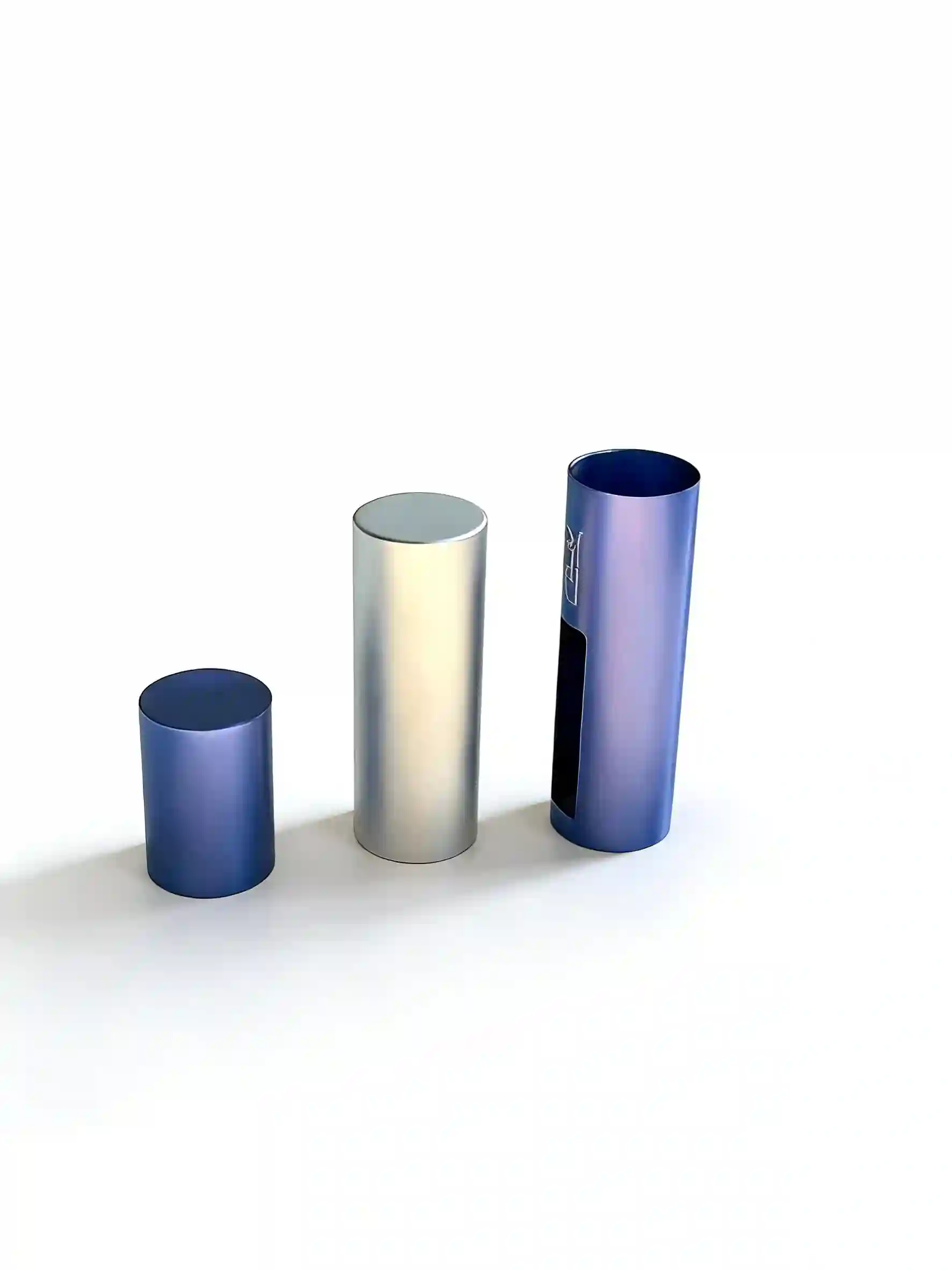
A perfume shoulder sleeve that slides down mid-display or detaches during shipping is not a minor cosmetic inconvenience — it is a measurable quality failure. For fragrance brands, it triggers consumer returns, erodes shelf appeal, and exposes gaps in supplier qualification. For packaging engineers and OEM buyers, it signals an upstream specification problem that mass production will only amplify. Understanding why sleeves fail before tooling is cut or purchase orders are placed is the most cost-efficient intervention point available.
This article diagnoses the four root causes behind perfume shoulder sleeve detachment — dimensional mismatch, material hardness incompatibility, adhesive failure, and surface contamination — and maps each to a procurement-ready corrective action. Whether you are qualifying a new sleeve supplier, troubleshooting an existing production run, or building a pre-production QC protocol, the fix-to-cause framework below gives you a structured path from complaint to correction.
1. Understanding How Perfume Shoulder Sleeves Are Supposed to Fit
1.1 The Mechanics of Sleeve Retention
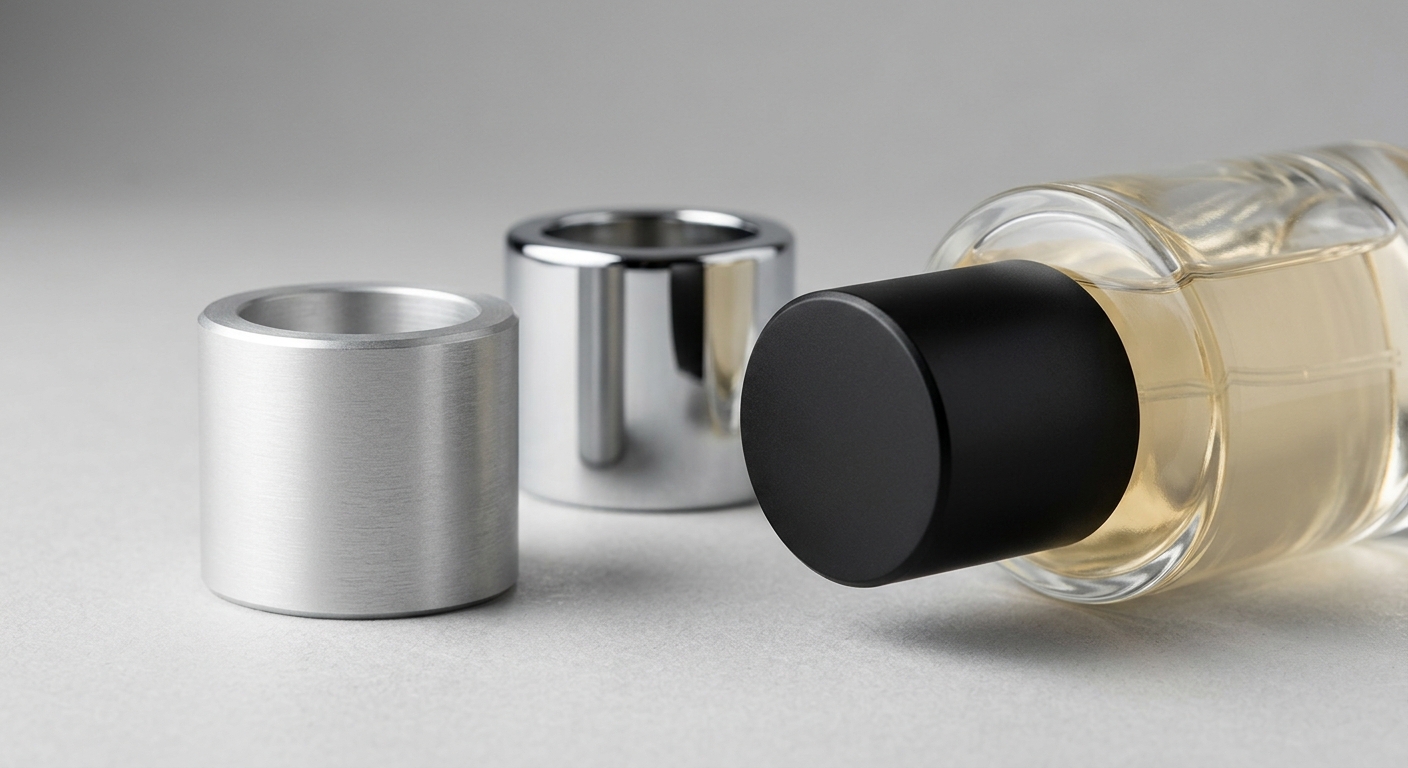
A perfume shoulder sleeve maintains its position through one of two primary mechanisms — or a calibrated combination of both: interference fit and adhesive bonding.
In an interference fit, the sleeve’s inner diameter is intentionally manufactured slightly smaller than the outer diameter of the bottle’s shoulder or neck zone. When the sleeve is pressed onto the bottle, the resulting radial compression generates friction force across the contact surface. This friction is the primary retention force. No adhesive is required if the interference value is correctly specified and the materials are appropriately matched.
Adhesive bonding supplements or replaces interference fit in applications where the bottle geometry does not allow sufficient contact area, or where the sleeve material is too rigid to flex into compression. In these cases, a thin adhesive layer fills micro-gaps between the sleeve bore and the bottle surface, creating a chemical bond that resists axial pull-off forces.
The critical design parameter is the sleeve-to-bottle contact zone: the axial length and surface area over which retention force is distributed. A sleeve with a short contact zone — even with correct interference — concentrates stress at two narrow rings rather than distributing it across a broad surface, making it vulnerable to rocking, angular displacement, and eventual detachment.
1.2 Industry Tolerance Standards for Shoulder Sleeve Fitment
Dimensional tolerance is where most sleeve failures originate. The table below outlines recommended fitment parameters by material type and bottle neck diameter range.
| Bottle Neck Diameter (mm) | Sleeve Inner Diameter (mm) | Recommended Interference (mm) | Sleeve Material | Retention Rating |
|---|---|---|---|---|
| 18.0 – 20.0 | 17.6 – 19.6 | 0.3 – 0.5 | ABS / Acrylic | Pass ≥ 15 N pull |
| 20.1 – 24.0 | 19.7 – 23.6 | 0.4 – 0.5 | Zamac | Pass ≥ 20 N pull |
| 24.1 – 28.0 | 23.6 – 27.5 | 0.4 – 0.6 | Aluminum | Pass ≥ 25 N pull |
| 18.0 – 24.0 | Match + 0.0 to +0.1 | Adhesive-only | Any rigid substrate | Pass ≥ 15 N pull |
An interference value below 0.3 mm on polymer sleeves typically produces insufficient radial compression for reliable retention. Above 0.6 mm, assembly force becomes excessive and risks cracking brittle sleeve materials or distorting glass bottle necks during press-fit. The tolerance window is narrow — and supplier tooling that drifts outside it during a production run is the single most common cause of field complaints.
2. The 4 Root Causes of Sleeve Slippage and Detachment
2.1 Cause 1 & 2 — Dimensional Mismatch and Wrong Material Hardness
Cause 1: Oversized Inner Bore. When a sleeve’s inner diameter is machined or molded even 0.3–0.5 mm larger than the specified tolerance, the interference fit is eliminated. The sleeve sits on the bottle without radial compression, held only by gravity and incidental contact. Any lateral force — shelf vibration, consumer handling, shipping impact — is sufficient to initiate sliding. This is the most common cause of sleeve slippage and is almost always a tooling or incoming inspection failure.
Cause 2: Shore Hardness Mismatch. Material hardness governs how much a sleeve deforms under radial compression. A sleeve manufactured from high-Shore-D ABS (typically Shore D 75–80) pressed onto a glass bottle generates predictable, stable friction. Substituting a lower-hardness polymer without recalculating the interference value means the sleeve compresses too easily, reducing effective contact pressure and retention force over time — particularly after thermal cycling. Zamac and aluminum sleeves, being essentially rigid, require tighter dimensional tolerances since they cannot flex to compensate for bore variation. Additionally, thermal expansion differentials between metal sleeves and glass bottles compound this effect: a metal sleeve fitted correctly at 20°C may loosen measurably at 35°C warehouse temperatures due to the higher thermal expansion coefficient of aluminum versus borosilicate glass.
2.2 Cause 3 & 4 — Adhesive Failure and Surface Contamination
Cause 3: Incorrect Adhesive Selection. Adhesive-retained sleeves fail when the adhesive chemistry is mismatched to the substrate pair. Cyanoacrylate adhesives, commonly used for speed, perform poorly on low-surface-energy plastics (polyethylene, polypropylene) and on porous Zamac castings without primer. UV-cure adhesives require clean, UV-transparent bond lines — a condition that opaque metal sleeves make impossible without fiber-optic cure systems. Viscosity matters equally: a low-viscosity adhesive on a vertical glass surface will drain before cure, creating a bond-starved joint. Specifying adhesive by substrate pair and applying it at validated viscosity and open-time parameters is non-negotiable for consistent bond strength.
Cause 4: Surface Contamination. Mold-release agents applied during bottle forming or sleeve casting leave a thin, chemically inert film on contact surfaces. This film is invisible to visual inspection but catastrophic to both friction-fit and adhesive retention. A mold-release residue reduces the effective coefficient of friction between sleeve and bottle by 30–50% in laboratory measurements. Humidity absorbed by hygroscopic sleeve materials (particularly certain nylon-filled ABS grades) further degrades adhesive bond strength over time. Bottles that arrive from forming with residual silicone or wax-based release agents and proceed directly to sleeve assembly without a cleaning step will produce high field-return rates regardless of dimensional accuracy.
3. Fix-to-Cause Matrix: How Each Solution Prevents Customer Complaints
3.1 Dimensional and Material Corrections
Correcting dimensional mismatch begins with a tolerance re-specification workflow: measure 30 production bottles from the current supplier lot (OD at the sleeve contact zone, using calibrated digital calipers at 3 axial positions), then compare against the sleeve inner-diameter spec. If the gap exceeds the target interference range, issue a corrective tooling order or switch to a supplier with documented Cpk ≥ 1.33 on bore diameter.
Material substitution decisions should be driven by the bottle substrate:
- ABS sleeves suit most glass and acrylic bottles with moderate interference fits; economical and reworkable.
- Zamac sleeves deliver premium weight and rigidity but require tighter bore tolerances (±0.1 mm) and are sensitive to thermal expansion; ideal for luxury positioning where adhesive is also applied.
- Aluminum sleeves offer the lightest metal option with excellent surface finish; require anodized inner bore for consistent friction coefficient.
Integrate a dimensional QC checkpoint at incoming sleeve inspection: 100% gauge-check of inner diameter on first article, AQL 2.5 on production lots.
3.2 Adhesive Selection and Surface Preparation Protocols
Match adhesive to substrate pair before any production run:
| Substrate Pair | Recommended Adhesive Type | Key Requirement |
|---|---|---|
| Metal sleeve / Glass bottle | Structural epoxy or MS polymer | Surface primer on metal bore |
| ABS sleeve / Glass bottle | Cyanoacrylate (gel, 400–500 cP) | IPA wipe on glass; no mold release |
| Zamac sleeve / Glass bottle | UV-cure acrylic (with fiber-optic cure) | Pore-sealing primer on Zamac |
| Rigid sleeve / Plastic bottle | 2-part epoxy or plasma treatment + CA | Surface energy check (≥ 38 dyne/cm) |
Pre-assembly cleaning standard: wipe all bottle shoulder surfaces with 99% isopropyl alcohol (IPA) on a lint-free cloth within 30 minutes of sleeve assembly. For high-volume lines, inline plasma treatment achieves more consistent surface activation than manual wiping.
Pull-force acceptance criteria: minimum 15 N axial pull-off force for polymer sleeves on standard fragrance bottles; 20–25 N for metal sleeves. Test 5 units per assembly batch using a calibrated force gauge; reject the batch if any unit falls below threshold.
4. Procurement & QC Checklist: What to Verify Before Mass Production
4.1 Sleeve Specification Validation Checklist
Every purchase order for perfume shoulder sleeves should include these five mandatory specification fields:
- Inner diameter with tolerance (e.g., Ø 19.6 mm ±0.1 mm)
- Material grade and Shore hardness (e.g., ABS UL94 HB, Shore D 78)
- Surface finish of inner bore (e.g., Ra ≤ 0.8 µm, no mold-release agent)
- Adhesive type if applicable (specify by brand/grade, not generic category)
- Minimum pull-force acceptance value (N, per agreed test method)
First-article inspection (FAI) must include dimensional report, material certification, and 10-unit pull-force test results submitted before production release. Do not waive FAI on re-orders from existing suppliers — tooling wear changes bore diameter over production cycles.
4.2 Supplier Capability Red Flags to Screen For
- Tooling age over 3 years without documented re-qualification: bore dimensions drift as mold steel wears.
- Cpk below 1.33 on inner diameter: indicates the process cannot reliably hold the tolerance window required for consistent interference fit.
- No adhesive process documentation: if a supplier cannot provide a written adhesive application procedure (type, quantity, open time, cure condition), their bond quality is operator-dependent and uncontrollable at scale.
- Inability to provide pull-force test data: retention testing is a basic quality output; suppliers who do not perform it routinely are not equipped to supply retention-critical components.
FAQ
Q1: What is the acceptable pull-force standard for a perfume shoulder sleeve to pass retention testing? The industry-accepted minimum is 15 N axial pull-off force for polymer sleeves (ABS, acrylic) on standard glass or plastic perfume bottles. Metal sleeves (Zamac, aluminum) should meet a minimum of 20–25 N given their higher mass and the greater forces they experience during handling. These values should be written into the purchase order as a contractual acceptance criterion, not treated as internal guidelines.
Q2: Can the same shoulder sleeve design work across both glass and plastic perfume bottles without modification? Not reliably. Glass and plastic bottles differ in outer diameter tolerance, surface energy, and thermal expansion coefficient. A sleeve dimensioned for a glass bottle will typically be too loose on an injection-molded plastic bottle of nominally the same size due to tighter glass forming tolerances. At minimum, re-validate pull-force on each new bottle substrate. In many cases, a bore diameter adjustment of 0.2–0.3 mm is required.
Q3: How do I identify whether sleeve slippage is caused by a tooling problem or an assembly process problem? Measure the inner diameter of failed sleeves from returned product. If bore diameter is consistently outside the specified tolerance, the cause is tooling. If bore diameter is within spec but pull-force is still insufficient, the cause is assembly process — most commonly surface contamination or adhesive application failure. A simple 10-unit dimensional audit on returned samples will separate the two failure modes within hours.
Conclusion
Perfume shoulder sleeve detachment is never random. It traces back to four controllable variables: dimensional tolerance, material hardness, adhesive selection, and surface cleanliness. Each variable has a measurable threshold, a testable acceptance criterion, and a correctable upstream fix. Brands and procurement teams that embed these checkpoints into supplier qualification, first-article inspection, and incoming QC eliminate the root cause before product reaches the consumer. The cost of a pull-force gauge and a dimensional audit on a first article is a fraction of one product return cycle — and an even smaller fraction of the brand equity lost when a sleeve falls off in a consumer’s hand. Specify correctly from the first purchase order. The four variables above are entirely within your control.