
Resumen
The indie fragrance market has grown into one of the most dynamic segments in beauty, with thousands of new brands launching annually through DTC channels, Etsy storefronts, and boutique retail. Yet behind many of these launches lies a sourcing decision that rarely gets discussed openly: the use of pre-formulated perfume bases as the product foundation.
For brand founders without a background in chemistry or the budget to retain a professional perfumer, perfume bases offer an accessible entry point — a ready-to-use aromatic concentrate that can be diluted, bottled, and branded within weeks. The appeal is obvious. The risks are less frequently examined.
This article is written for fragrance brand founders, product developers, and B2B buyers evaluating sourcing strategies. It covers what perfume bases actually are, why they’ve become the default starting point for indie launches, where they create genuine commercial advantages, and where they introduce structural limitations that can constrain growth. The goal is to help you treat this as a stage-appropriate decision — not a shortcut, and not a permanent compromise.
1: What Are Perfume Bases and How Do They Function in Perfumery?
1.1: The Anatomy of a Perfume Base
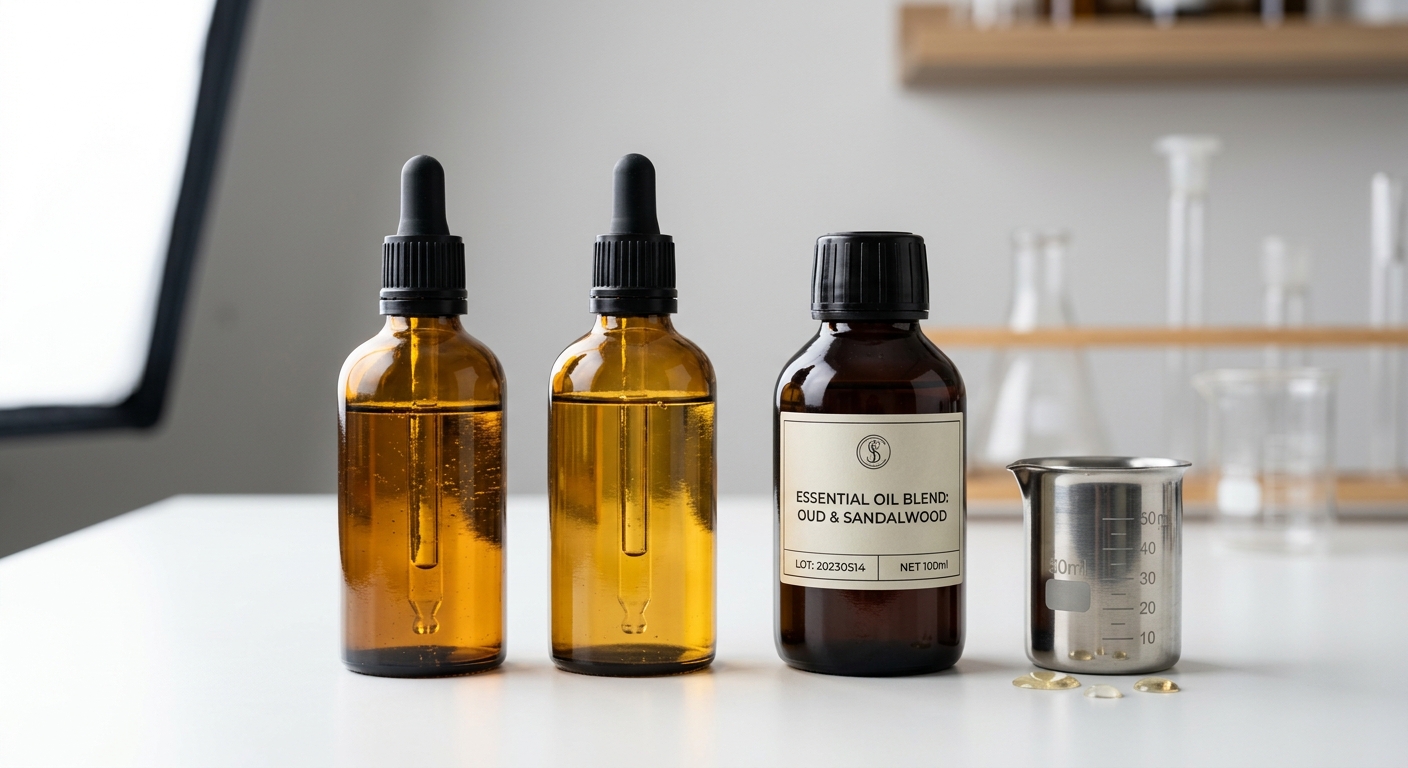
A perfume base is a pre-blended aromatic concentrate formulated by a fragrance house or ingredient supplier. Unlike a finished fragrance, it is not yet a consumer product — it requires dilution into a carrier before use. But unlike individual raw materials, it already contains a complete olfactory architecture: top notes that create the opening impression, heart notes that define the character, and base notes that anchor the dry-down and longevity.
Most commercial perfume bases are supplied at high concentration levels — typically between 50% and 100% aromatic content — designed to be diluted into ethanol, isopropyl alcohol, or dipropylene glycol (DPG) depending on the intended application. A standard Eau de Parfum formulation, for example, typically incorporates a perfume base at a 15–20% usage rate in alcohol.
The internal composition of a base may include synthetic aroma chemicals (such as musks, aldehydes, or woody molecules), natural essential oils, isolates, and fixatives. The exact formula is proprietary to the supplier. What the buyer receives is the olfactory result — a stable, repeatable aromatic profile — without access to the underlying ingredient breakdown.
1.2: How Bases Differ From Raw Materials and Custom Formulas
Understanding where perfume bases sit in the supply chain helps clarify when they’re the right tool.
Raw material blending means working directly with individual aroma chemicals and essential oils to construct a fragrance from scratch. This requires perfumery training, access to a broad ingredient library, and significant development time. It offers maximum creative control but is impractical for most brand founders.
Custom formula development involves briefing a professional perfumer or fragrance house to create an exclusive scent to your specification. This delivers a proprietary formula with full ingredient transparency — but typically requires a retainer or minimum development fee, a 3–6 month timeline, and higher MOQs once production begins.
Perfume bases occupy the middle ground: ready-to-use, fast to deploy, and compliant by design — but without formula ownership.
| Dimensión | Base de perfume | Custom Formula | Raw Material Blending |
|---|---|---|---|
| Development Time | Days to weeks | 3–6 months | 6–12+ months |
| Minimum Order Quantity | Low (often 1–5 kg) | Medium–High | Variable |
| Cost per Unit | Low–Medium | Medium–High | High (labor + materials) |
| Regulatory Docs Provided | Yes (SDS, IFRA) | Yes (if requested) | Self-managed |
| Creative Control Level | Bajo | Alto | Maximum |
| Recommended For | Startups, MVPs, test launches | Established brands, retail | In-house perfumers |
2: Why Indie Brands Choose Perfume Bases as a Starting Point
2.1: Speed-to-Market and Capital Efficiency
The economics of indie brand launches are defined by constraint. Most founders are self-funded, working with limited runway, and need to validate market demand before committing to large production runs. Perfume bases directly address this reality.
With a pre-formulated base, the product development cycle collapses from months to days. There is no perfumer brief to write, no iteration rounds to fund, no stability testing to commission from scratch. A founder can order samples from a supplier, select a profile that aligns with their brand concept, dilute to the target concentration, and have a testable product in hand within a single week.
From a capital perspective, this eliminates the perfumer retainer (which can range from $2,000 to $20,000+ for a bespoke brief), reduces the cost of failed development rounds, and allows small-batch production at quantities that would be uneconomical with custom formulas. For a brand testing a new concept or entering a new scent category, this lean approach preserves capital for packaging, marketing, and customer acquisition — the areas where indie brands typically need to compete.
2.2: Compliance and Supplier Documentation Advantages
Regulatory compliance is a genuine barrier for small fragrance brands, particularly those selling into the EU, UK, or through Amazon and major retail platforms. A fragrance product requires, at minimum, a Safety Data Sheet (SDS), an IFRA compliance certificate for the relevant application category, and — for EU cosmetics — a Cosmetic Product Safety Report (CPSR) signed by a qualified assessor.
Reputable perfume base suppliers provide IFRA-compliant formulations pre-certified to current amendment standards, along with full SDS documentation and allergen declarations. This means a brand founder doesn’t need to conduct independent IFRA calculations or commission ingredient safety assessments for the base component itself. The documentation burden shifts substantially to the supplier.
This is a meaningful operational advantage for DTC brands and small-batch producers who lack in-house regulatory expertise. It doesn’t eliminate all compliance obligations — finished product safety assessment is still required — but it significantly reduces the technical complexity of the documentation process.
3: What You Give Up — The Real Limitations of Starting With Bases
3.1: Differentiation Risk in a Crowded Market
The same accessibility that makes perfume bases attractive to indie founders also means that multiple brands may be selling products built on identical or near-identical formulations. A popular base distributed by a major supplier could be the foundation for dozens of branded fragrances across different price points and aesthetics — none of which are distinguishable by scent alone.
This creates a structural problem for brand identity. Fragrance storytelling — the narrative around provenance, inspiration, and uniqueness — is a primary driver of perceived value in the indie perfume market. If your “signature scent” is available to any buyer with a minimum order, the authenticity of that narrative is compromised. Sophisticated consumers and fragrance enthusiasts are increasingly capable of identifying shared bases across brands, and online communities actively discuss these overlaps.
The differentiation risk is manageable at launch, when building an audience and testing price sensitivity. It becomes more acute as a brand scales and invests in positioning — particularly if competing for shelf space in curated retail or building a loyal direct customer base.
3.2: Scaling Constraints and Long-Term Supplier Dependency
Brands that grow on a perfume base foundation often encounter a structural ceiling. Because the formula is owned by the supplier, not the brand, there is no proprietary asset to protect, license, or transfer. If the supplier discontinues the base — due to ingredient sourcing changes, IFRA amendment updates, or business decisions — the brand has no recourse beyond reformulation.
MOQ escalation is a related issue. As order volumes grow, some suppliers shift pricing tiers or impose higher minimum quantities that strain cash flow. Wholesale and retail buyers, meanwhile, may request exclusivity or formula verification that a base-dependent brand cannot provide.
For brands planning to raise investment, pursue retail distribution, or build enterprise value around their fragrance portfolio, the absence of formula ownership is a material weakness. Transitioning to a custom formula later is entirely possible — but it requires reintroducing customers to a reformulated product, which carries its own brand risk.
4: How to Evaluate and Source Perfume Bases as a B2B Buyer
4.1: Key Specification Parameters to Request From Suppliers
Before committing to a perfume base, request the following technical documentation from any supplier:
- Concentration percentage: Confirms the aromatic load and informs your dilution calculations.
- Solubility data: Specifies compatibility with ethanol, IPM, DPG, and other carriers — critical for formula stability.
- Recommended usage rate: Supplier-specified range for different fragrance product types (EDC, EDP, body care).
- Stability data: Confirms performance under UV exposure, temperature variation, and time — relevant for shelf-life claims.
- Allergen declaration: Lists regulated allergens per EU Cosmetics Regulation Annex III — required for finished product labeling.
- IFRA compliance certificate: Specifies the amendment version and applicable product categories.
Suppliers who cannot provide these documents on request should be disqualified from consideration, regardless of price.
4.2: Vetting a Perfume Base Supplier for Long-Term Partnership
Technical documentation is the baseline. Long-term supplier qualification requires additional evaluation:
- Batch consistency: Request batch COAs (Certificates of Analysis) across multiple production runs. Aromatic profile and physical properties should fall within defined tolerances.
- Private-label exclusivity options: Some suppliers offer regional or category exclusivity on specific bases — a meaningful differentiation lever for growing brands.
- Sample program: A structured sample program with clear lead times signals a supplier organized for B2B relationships, not just spot orders.
- Lead times and stock availability: Understand whether the base is made-to-order or held in inventory, and what the realistic replenishment timeline is at your projected order frequency.
Treat supplier selection as a strategic partnership decision. The operational risk of a mid-growth supplier transition — reformulation, regulatory re-documentation, customer communication — is significant enough to justify rigorous upfront vetting.
Preguntas frecuentes
Can I trademark or claim ownership of a fragrance built on a perfume base? You can trademark your brand name, bottle design, and product packaging — but not the scent itself, and not a formula you don’t own. If the base supplier sells the same formulation to other buyers, you have no legal basis to prevent them from doing so. Some suppliers offer exclusivity agreements for specific bases, which provides contractual protection but not intellectual property ownership.
What is the typical usage rate for perfume bases in an Eau de Parfum formulation? Most perfume bases are used at 15–20% concentration in a standard EDP formulation (in ethanol). The exact rate depends on the base’s aromatic strength and the supplier’s recommendation. Always conduct your own olfactory evaluation at the supplier’s suggested range before adjusting, and confirm that the final concentration remains within IFRA limits for the relevant product category.
How do I know if a perfume base is IFRA-compliant for leave-on cosmetic applications? Request the IFRA compliance certificate and verify that it covers Category 4 (fine fragrance) or the relevant leave-on category for your product type. Confirm the amendment version — IFRA updates standards periodically, and older certificates may not reflect current limits. For EU market products, also verify that the allergen declaration aligns with the current Cosmetics Regulation requirements.
Conclusión
Perfume bases are not a workaround. For indie fragrance brands at the launch and validation stage, they are a strategically sound tool — one that compresses development timelines, reduces capital requirements, and transfers a significant portion of the regulatory documentation burden to the supplier. These are real advantages that enable founders to test market fit before committing to the cost and complexity of custom development.
The limitations are equally real: shared formulas, no formula ownership, and scaling constraints that become more consequential as a brand grows. The key is to treat the decision as stage-appropriate — a foundation for building market presence and customer insight, not a permanent product strategy.
If you are currently evaluating perfume base suppliers, prioritize technical documentation quality, batch consistency, and exclusivity options alongside price. If you are approaching the point where brand differentiation and formula ownership matter more than speed-to-market, that is the signal to begin the transition toward custom development — informed by the market knowledge you’ve built on the base foundation.